
A dialogue is not a confrontation between two monologues. (Inspired by Frithjof Schuon)
Can one see that one is not a brain-in-a-vat?
This is a repost from 21 December 2009, slightly emended. I've added a clarifying addendum.
…………………………..
John Greco, How to Reid Moore:
So how does one know that one is not a brain in a vat, or that one is not deceived by an evil demon? Moore and Reid are for the most part silent on this issue. But a natural extension of their view is that one knows it by perceiving it. In other words, I know that I am not a brain in a vat because I can see that I am not. [. . .] Just as I can perceive that some animal is not a dog, one might think, I can perceive that I am not a brain in a vat. (21)
Really?
A bobcat just walked past my study window. I see that the critter is a bobcat, and seeing that it is a bobcat, I see that it is not a dog, or a deer or a javelina. So far, so good. But then John Greco comes along and tells me that in the same sense of 'see' — the ordinary visual-perceptual sense — I can see that I am not a brain-in-a-vat, a BIV. But 'surely' one cannot see or otherwise perceive such a fact. Or so I will argue.
None of us really believe that we are BIVs, and only some really believe that we are creatures of God. Pursuing this parallel may shed some light. So consider:
Q1: How do you know you are not a BIV?
A1: I see that I am not.Q2: How do you know that you are not a creature of God?
A2: I see that I am not.
These question-answer pairs seem on a par. If the atheist says that he sees that he is not a creature of God, or more generally, sees that the manifest world is not a divine artifact, then we point out to him that this is not the sort of state of affairs that can either be seen to be the case or seen not to be the case. For no matter how intently one observes (whether visually or in any other sense-modality) anything in the natural world, one will not be able to discern whether or not it has creature-status. (By 'creature-status' I mean the ontological status of being a product of divine creative activity.) This is true of the objects of outer perception as well as the objects of (Brentano calls) inner peception, e.g. memories, desires, sensations, etc. And of course nothing is changed by the use of instruments. If I study the moon through a telescope, I will be in no better position to determine that it is a divine artifact than if I view it with the naked eye. Landing on the moon, taking geological selenological samples, won't help either. And the same goes for any instrumental extension of the human senses.
In sum, using 'see' to cover inner and outer sense-perception, whether 'naked' or instrumentally extended, one cannot see whether or not our world is a divine artifact. The same is true with respect to our BIV-status: one cannot see whether or not one is a BIV. For what would one look at, or look for, in order to make this out? Would I stare at the bobcat outside my window and try to isolate a property of the critter that would entail that its appearance to me is solely the result of the machinations of an evil scientist? Or would I look for a property that would entail the animal's not being such a result?
Or is there perhaps some particular thing I must search for the finding or non-finding of which would resolve the question of whether I am a BIV? You may recall Soviet cosmonaut Yuri Gagarin's suborbital flight in April, 1961. He beat the American astronaut Alan Shepard to the punch by a couple of months. What remains with me from the news reports is Gagarin's claim to the effect that he didn't see God out there in outer space.
I thought to myself at the time, "That dumb Commie thinks that God is a physical object floating around in outer space!" Later on it occurred to me that Gagarin might have made his statement just to please the Party ideologues back on the ground in Moscow. Now just as one cannot resolve the God question by poking around in outer space, one cannot resolve the BIV question by poking around in outer sublunary space or inner space.
The atheist who thinks that theism can be refuted by sense-perception is not understanding the issue. The same goes for the theist who thinks that theism can be proven by sense-perception. For the question does not concern observables, but the ontological status of observables. In Heideggerian jargon, it does not concern das Seiende, that-which-is, but das Sein, the Being of that-which-is. In particular, it concerns the ontological status, God-dependent existence.
Similarly, one who thinks that the problem of the external world, which is essentially the problem of the ontological status of the objects of outer perception, can be solved by perception, does not understand the issue. One cannot see that one is or is not a BIV, or dreaming, or being deceived by an evil demon, etc. The question is not about observables, but about their ontological status, their dependence on or independence of our minds or some Mind.
I can see that the animal in front of me is a bobcat. So seeing, I see that the animal is not a dog. But no amount of observation can disclose that the object appearing to me either has or does not have the ontological status of mind-independent existence.
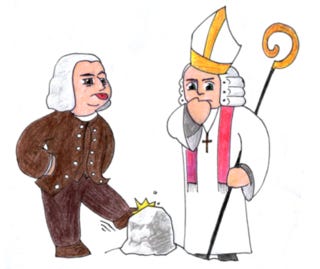
My point is connected with the one I made yesterday, namely, that one cannot refute an idealist such as Berkeley in some quick Moorean way by appealing to some obvious fact of sense-perception. The good bishop cannot be refuted by kicking a stone. For Berkeley is not denying that there are stones and such: he is forwarding a theory of their ontological status, and this status cannot be discerned by seeing or touching or experiencing resistance to kicking.
Addendum (3/30/2023)
My adducing of the BIV Gedankenexperiment — which is usually presented as an updated Cartesian dream argument — perhaps unnecessarily complicates the main point I want to make. And this for reasons I won't go into lest I complicate things still further. So consider these parallel questions:
Q3: How do you know that the tree in the quad exists independently of any mind?
A3: Just by looking at it! It is evident to the senses (and not just the sense of sight) that it exists an sich, in itself, and would so exist even if there were no minds at all whether ectypal or archetypal.
Q4: How do you know that the tree in the quad exists independently of divine creative action?
A4: Just by looking at it! It is evident to the senses (and not just the sense of sight) that it exists an sich, in itself, and would so exist even if there were no minds as all whether ectypal or archetypal.
Here the parallel is very close indeed. For however we construe divine creation (whether as creatio ex nihilo or as creatio ex deo along Neoplatonic emanationist lines, or even deistically) we absolutely cannot construe divine creation as the production of a material world by a material world-maker. God cannot be a material thing. We are forced to think of him as a mind or spirit who immaterially creates material things, but not out of any pre-existent or pre-given matter.
If this is intelligible, then Berkeleyan idealism is intelligible. In particular, it is intelligible how a material thing such as the tree in the quad can have an ideal mode of being. If so, Berkeley is not an eliminativist who denies that there are material beings, but a a sort of metaphysical reductionist who reduces them to ideas in, or rather before, the mind of God.
We Need a Fitter Man

Argumentum ad Lapidem?
No way, I say. Over at Substack.
Ed comments:
"He did not maintain that rocks and trees do not exist; he did not deny or even question whether they are; he offered an unusual ontological account of what they are, namely, ideas in minds, including the divine mind." (BV)
True, but careful examination of Berkeley’s argument shows that he provides no clear definition or explanation of what “ideas” are.
He opens the Treatise as follows:
It is evident to any one who takes a survey of the objects of human knowledge, that they are either ideas actually imprinted on the senses; or else such as are perceived by attending to the passions and operations of the mind; or lastly, ideas formed by help of memory and imagination — either compounding, dividing, or barely representing those originally perceived in the aforesaid ways.
But is it “evident”? I look at the brown and black colours of the surface of my desk. These appear to be qualities of the desk surface itself, and not “imprinted on the senses” at all. Is Berkeley saying that the desk surface itself is imprinted on my senses? But that strange claim has to be clarified. Later on he offers a critique of the idea of substance, arguing that ideas are mental items, therefore cannot be supported by an immaterial item, substance. But that begs the question. If ideas are sensible qualities like colours, what evidence is there for their being mental items?
As for Johnson’s argument, what is the quale corresponding to resistance? Resistance, i.e. Newtonian force, is the most material of qualities. How can there be a quale of resistance without resistance itself?
BV: Newton's First Law of Motion implies that a stone, say, will remain at rest unless acted upon by an external force such as Johnson's kick. An object at rest thus resists being moved. This resistance is a (dispositional) property of physical things. The quale corresponding to this resistance could be called felt resistance. It is a mental in nature and cannot exist without a perceiver who, for example, tries to move a rock with his foot.
"How can there be a quale of resistance without resistance itself?" An idealist of the Berkeleyan sort could say that there can't be a quale of resistance without resistance itself but then go on to say that (i) physical things are nothing more than objects of the divine mind, and (ii) resistance qualia exist only in finite (creaturely) minds. In this way the distinction between resistance qualia and resistance itself could be upheld.
The point I was making in my Substack article was that the good bishop cannot be refuted by kicking a stone. This is because Berkeley is not denying that there are stones; he is making a claim about the mode of being of stones, namely that their being/existence is ideal: they are accusatives of divine awareness and nothing more. As I read him, Berkeley is not an eliminativist about stones and trees in quads, etc. You could call him an ontological reductionist about such and sundry.
Daniel Dennett, by comparison is an eliminativist about qualia. He I can refute by kicking 'stones,' namely his cojones. If I kick him in the groin, he will be brought to understand that felt pain, phenomenal pain, lived pain, is the most real thing in the world, and cannot be denied. I am assuming, of course, that he is not a zombie (as philosophers use this term). But that leads us in a different direction.
Is Hoplophobia an Element in Biden’s Dementia?
Recent events suggest that it is. But you decide. Logically prior question: What is hoplophobia?
Climate ‘Theology’
Tucker Carlson has a bad habit of referring to climate alarmism as climate 'theology.' I know what he is trying to say, but it is unseemly for a conservative to misuse a perfectly good word and denigrate that to which it refers. Natural theology, which is a branch of philosophy, is a legitimate inquiry, as is theology proper, which is not a branch of philosophy. A second example:
In the left-wing rag of record, the NYT, we find:
“When you buy gold you’re saying nothing is going to work and everything is going to stay ridiculous,” said Mackin Pulsifer, vice chairman and chief investment officer of Fiduciary Trust International in New York. “There is a fair cohort who believes this in a theological sense, but I believe it’s unreasonable given the history of the United States.”
So to believe something 'in a theological sense' is to believe it unreasonably. It follows that liberals have plenty of 'theological' beliefs. In the 'theology' of a liberal, theology can be dismissed unread as irrational.
And then there is the misuse of 'metaphysics.' I'll save that rant for later.
The wider pattern is the secularization of religious language.
Take ‘retreat.’ Time was, when one went on a retreat to get away from the world to re-collect oneself, to meditate on the state of one's soul and on first and last things. But now one retreats from the world to become even more worldly, to gear up for greater exertions in the realms of business or academe. One retreats from ordinary busy-ness to prepare for even greater busy- ness.
Another perfectly good word has been destroyed.
As I have said more than once, if you are a conservative, don't talk like a damned 'liberal.' Why the sneer quotes? Because there is nothing classically liberal about contemporary liberals who are ever on the slouch toward leftism, and its most noxious variant, 'wokery.'
Realize that we are in a war, and in a war one does not give ammo to the enemy. Do not validate, by employing, the Left's obfuscatory terminology. Never use 'woke' without sneer quotes. Never use words like 'homophobic' or 'transphobic.' Never use 'Islamophobia' as I once caught the great Victor Davis Hanson doing. A phobia is an irrational fear, and there is nothing irrational about fear of radical Islam.
Language matters. Some battles are won and lost on linguistic ground. Leftists understand this. They understand that he who controls the language controls the debate. This explains the Left's unremitting Orwellian abuse of language and their asinine question-begging and question-burying neologisms.
2 + 2 = White Supremacy
Are There Any Decent Democrats?
There is at least one. His name is Robert F. Kennedy, Jr. I recommend his A Letter to Liberals: Censorship and COVID: An Attack on Science and American Ideals (Skyhorse Publishing, 2022). It is mercifully short, x + 110 pages long, and well worth your time. It is extremely well-documented. The text itself runs to x + 87 pp. with 239 endnotes, most of them with hyperlink info. Here is something I didn't know:
At the outset of the pandemic, most of the world's leading news organizations — BBC, Reuters, AP, AFD, CBC, CNN, CBS, ABC, Washington Post, Financial Times, Facebook, Google/YouTube, Microsoft, Twitter, and others — organized themselves into a collusive antidemocratic and anticompetitive cartel known as the Trusted News Initiative (TNI) — pledged to squelch and censor all reports about government COVID countermeasures that challenged official proclamations. (p. 52 f; endnote 153 points us to the BBC, December 10, 2020.)
I don't believe that there is any chance that RFK Jr. will 'pull a Tulsi' and quit the Democrat Party, although he should. He won't because he's a Kennedy, and I am guessing that he already has enough trouble with his extended family. (See here.) Like many old-time Dems, he fancies he will wrest the leadership of his party away from the 'woke'-left totalitarians who now control it. If that's what he thinks, he's fooling himself.
The irony is that RFK fils, despite his speech impediment and lack of charisma, has a better chance of beating either Trump or DeSantis in 2024 than any other Dem I can think of.
Expressive Individualism
Is Trump an example?
Substack latest.
Is Graduate School Really That Bad?
Top of the Stack.
A Response to My Is Sin a Fact?
Brian Bosse is not convinced by my Substack article, Is Sin a Fact? A Passage from Chesterton Examined. Brian writes,
Your Argument Against Chesterton
(1) If the existence of sin is a fact one can see in the street, then the existence of God is a fact one can see in the street.
(2) It is not the case that the existence of God is a fact one can see in the street.
From (1) and (2), it follows that
(3) It is not the case that the existence of sin is a fact one can see in the street.
Bill’s Prior Commitments
(4) The existence of moral evil is a fact one can see in the street.
(5) There are objective moral values/laws.
It seems to me that from (4) and (5) one must conclude that…
(6) The existence of objective moral values/laws is a fact one can see in the street.
Bill, do you accept (6)? If so, do you think it is possible for there to be objective moral laws in a non-theistic worldview?
I endorse the first argument. It is obviously valid in point of logical form, instantiating as it does modus tollens. And I claim that both premises are true. You will agree with me that the first is true if you agree that sin is an offense against God, which implies that if there is no God, then there is no sin. The first premise is uncontroversially true because true ex vi terminorum, which is a fancy way of saying that it is true by definition. You will agree with me that the second premise is true if you agree that the existence of sinful acts and sinful omissions is not perceivable via the senses. (More on this in a moment.)
As for the second argument, I did not give it and I do not endorse it. I do not consider (4) to be true. And I reject (6). Brian is omitting some important distinctions I make. I affirm the existence of moral evil (evil that comes about through the actions and omissions of free agents), but I say nothing in that Substack article about how the fact of moral evil is known. Is there moral evil? is one question. How do we know that there is moral evil? is a different question.
Do we literally see moral evil? Is there any empirical access to it? Can we build a 'ponerometer,' an evil detector? Do we humans possess a non-empirical sensus moralitatis whereby we discern the existence of moral evil? These are just some of the questions that naturally arise. I deny that we literally see instances of moral evil. I will give a graphic example in a moment.
It is also important not to leave out the distinction I make between two senses or uses of fact.' On one use of 'fact,' a fact is a true proposition. On a second use, a fact is a true proposition known to be true. If the existence of moral evil is a fact in the second sense, that leaves open the question as to how we know that moral evil is a fact in this second sense. I deny that we can see it (with our eyes) "in the street." The fact of moral evil is not "as plain as potatoes," to use Chesterton's expression. I know that the vegetable on my counter is a potato by seeing it (with my eyes). I do not see moral evil with my eyes. I maintain that there are actions that are morally evil, but I deny that their being morally evil is a fact that one can literally see. Now for the example.
There is a video online that depicts a black thug nonchalantly loading his semi-automatic pistol and shooting in the back of the head a homeless man sitting on a curb. What do you see? You see a man shooting another man in the head. You do not see the evil of the act. (You do not see the illegality of the act either. You see a killing; you do not see a murder.) That is not to say that the act is not evil; it is to say that the evilness of the act is not visible or in any other way empirically detectable by our outer senses even when instrumentally extended. Suppose you saw the shooting from different angles in great detail, with the blood surging out of the wound, etc. You would still not thereby know by empirical means that the the act of shooting is an evil act. Suppose you had a videotape of the entire execution and then analyzed it frame-by-frame. Would you then see (with your eyes) the evilness of the act? Of course not.
In sum, I affirm the existence of moral evil. But I deny both that the existence of moral evil is a fact one can see in the street, and that the existence of sin is a fact that one can see in the street. The crucial point however, as Brian appreciates, is that moral evil is not the same as sin. It is perfectly plain that sin presupposes the existence of God. It is not perfectly plain that objective moral evil presupposes the existence of God.
Brian asks, "Do you think it is possible for there to be objective moral laws in a non-theistic worldview? [i.e., in a world in which God does not exist?]" Well, there cannot be objectively binding moral commandments without a very special commander, or objectively binding moral imperatives without an Imperator. But why couldn't there be objectively true moral declaratives — e.g., it is wrong always and everywhere to torture innocent human beings for one's sexual gratification — in the atheist's world?
But these questions go well beyond the topic of my article which was merely to show that Chesterton was blustering when he claimed that it is empirically obvious — "plain as potatoes," a fact in the second sense — that there are sinful deeds and omissions. That could be true only if it is empirically obvious that God exists. But the latter is not empirically obvious.
Saturday Night at the Oldies: Coffee
October 1st is International Coffee Day. But we are still in March. So I'm jumping the gun as one might do under the influence. Herewith, some tunes in anticipatory celebration. Not that I'm drinking coffee now: it's a morning and afternoon drink. I am presently partaking of a potent libation consisting of 3/4 Tequila Añejo and 1/4 Aperol with a non-alcoholic St. Pauli Girl as chaser. Delicioso!
Ella Mae Morse, Forty Cups of Coffee
Cream, The Coffee Song
Johnny Cash and Ramblin' Jack Elliot, A Cup of Coffee
Commander Cody, Truck Drivin' Man. This one goes out to Sally and Jean and Mary in memory of our California road trip nine years ago. "Pour me another cup of coffee/For it is the best in the land/I'll put a nickel in the jukebox/And play that 'Truck Drivin' Man.'"
Dave Dudley, Coffee, Coffee, Coffee
Calexico & Roger McGuinn, Another Cup of Coffee. A good version of this old Dylan tune.
Mississippi John Hurt, Coffee Blues
Patricia Kaas, Black Coffee
Annette Hanshaw, You're the Cream in My Coffee, 1928
Johann Sebastian Bach, Coffee Cantata
What is wrong with people who don't drink or enjoy coffee? They must not value consciousness and intensity of experience. Poor devils! Perhaps they're zombies (in the philosophers' sense).
Patrick Kurp recommends Rick Danko and Paul Butterfield, Java Blues, one hard-driving, adrenalin-enabling number which, in synergy with a serious cup of java will soon have you banging hard on all synaptic 'cylinders.'
Chicory is a cheat. It cuts it but doesn't cut it.
"The taste of java is like a volcanic rush/No one is going to stop me from drinking too much . . . ."
Warren Zevon, I'll Sleep When I'm Dead
A Hot Sauce Rant from 2013
A hot (sauce rant) or a (hot sauce) rant? Both. Parentheses matter! Scope matters. All scope distinctions matter. Mind your p's and q's. Discriminate operators and operands. (Am I sending a coded message?)
Substack latest.
Don't complain about 'old news.' What are you, a Twitterized 'woke' presentist?
There is presentism in the philosophy of time and there is what I will call, for want of a better term, historical presentism. This, roughly, is the conceit that the present alone matters and that we have little or nothing to learn from the past. It is not so much a view as an attitude, a 'bad 'tude' if you will, one shared by adolescents of all ages. There is the punk who, ignorant of great literature, installs Bukowski in the literary pantheon. Self-insulation from the past and its achievements is one of the ways wokesters self-enstupidate.
And there are those who ought to know better, spineless university administrators in the grip of fashionable obsessions, who are thereby rendered incapable of just judgments of past times and individuals. Case in point: the Flannery O'Connor unnaming.
Pasta Puttanesca
Pasta Puttanesca is a good Lenten meal for a Friday night despite its being 'in the style of the whore.' Italian la puttana means whore, harlot, slut. Didn't Jesus suffer all to come unto him, even the ladies of the evening?
Make it with sardines: 'meatier' than anchovies. Pour some extra virgin olive oil into a pan. Don't ask how much. Eyeball it like a man. Dump some chopped-up garlic onto the olio d'oliva lube job. Set the heat to moderate. Crack open the can of sardines and dump the contents, oil, water, and all into the pan. Break the formerly-sentient sea critters into small pieces. Add a can of diced tomatoes. Throw in your Italian spices and fresh-ground pepper. Chop up some olives and add to the mix. Stir. Simmer.
You knew without my telling you to get a righteous quantity of water boiling. Dump the pasta into the boiling water. Capellini cooks quickly thus comporting well with the celerity with which this dish is supposed to be thrown together at the end of a long day. Cook the pasta a little shy of al dente. It will cook further when you add it to the sauce. Eat it topped with freshly-grated Parmigiana Reggiano or Pecorino Romano. Wash it down with a glass or two of Dago Red. Think with compassion of the ladies of the evening. But do not avail yourself of their services.
To the scholarly among you I recommend Benedicta Ward, SLG, Harlots of the Desert: A Study of Repentance in Early Monastic Sources, Cistercian Publications, 1987. With chapters on Mary Magdalene, Mary of Egypt, Pelagia, Thais, and Maria the Niece of Abraham.
It Pays to Publish . . .
. . . but don't pay to publish. Leader of the Stack.