
A fem-Dem asks, and I explain. Over at the Stack.
And at Facebook this morning, I put up seven posts.
Substack latest.
Habermas makes mention of this fellow.
This entry raises the question whether Husserl’s theory of intentionality supports the sort of realism Thomists embrace. I argue that it doesn’t.
My Serbian correspondent Milosz sent me a reference to an article in Commonweal in which we read:
What attracted these Catholics to Husserl was his theory of intentionality—the notion that human consciousness is always consciousness “of” something. This appealed to Catholics because it appeared to open a way beyond the idealism of modern philosophy since Kant, which had threatened to undermine the possibility that human beings could possess an objective knowledge of realities outside the mind, including God.
Husserl’s phenomenology seemed to offer a solution to this problem. His promise to return “to the things themselves” sounded to many Catholics like a vindication of medieval scholasticism, which stressed that human beings have the capacity to objectively know reality independent of the mind. This led some Catholics to dub phenomenology a “new scholasticism.” By pointing “beyond” modern philosophy, they hoped that phenomenology could also serve as a path “back” to medieval thought, so that one might begin from the perspective of modern philosophy and end up somewhere closer to Thomas Aquinas. Husserl’s phenomenology thus opened up the possibility that modern, secular philosophy could be converted to Catholicism.
The Commonweal article is annoyingly superficial, and the last sentence quoted is just silly. Do I need to explain why? At the very most, Husserl’s doctrine of intentionality prior to the publication in 1913 of Ideas I could be interpreted as supportive of realism, and was so interpreted by many of his early acolytes, among them, the members of the Göttingen and Munich circles. And so in some very vague sense, Husserlian intentionality could be taken as pointing back, via Franz Brentano, to medieval thought and to Thomas Aquinas in particular, assuming one doesn’t know much about Thomas or Husserl. But the claim that “Husserl’s phenomenology thus opened up the possibility that modern, secular philosophy could be converted to Catholicism” is risible.
Undiluted Roman Catholicism consists of extremely specific theological doctrines. No one could reasonably hold that a realistically interpreted Husserl could soften secular philosophers up for Trinity, Incarnation, Virgin Birth, Transubstantiation, Papal Infallibility, etc. (I will note in passing that it was the promulgation of the Infallibility doctrine that triggered Brentano’s leaving of the priesthood.) The most that could be said is that the (merely apparent) realism of the early Husserl was welcomed by Catholic thinkers. In any case, Husserl was not a realist, but a transcendental idealist as I will argue below.
But now let’s get down to brass tacks with a little help from Peter Geach. I will first sketch the intentionality doctrine of Thomas. It will then become apparent, if you know your Husserl, that there is nothing like the Thomistic doctrine in Husserl. In the second main section I will explain how Husserl’s theory differs and how it leads him to transcendental idealism.
A theory of intentionality ought to explain how the objective reference or object-directedness of our thoughts and perceptions is possible. How do our thoughts and perceptions reach things in reality ‘outside’ the mind? Suppose I am thinking about a cat, a particular cat of my acquaintance who I have named ‘Max Black.’ How are we to understand the relation between my mental act of thinking, which is a transient datable event in my mental life, and its object, the cat I am thinking of? What makes my thinking of Max a thinking of Max? Or perhaps Max is in front of me and I am not merely thinking about him but seeing him. What makes my seeing a seeing of him? What makes these mental acts, whether of sense or intellect, take an object, and not just any object, but the very object they do take? Please note that, while I have set up the problem as one concerning the relation of intentionality, it is not obvious that intentionality is a relation sensu stricto as we will see in a moment.
1. Intentionality in Thomas Aquinas
Here is what Peter Geach has to say, glossing Aquinas:
What makes a sensation or thought of an X to be of an X is that it is an individual occurrence of that very form or nature which occurs in X — it is thus that our mind ‘reaches right up to the reality’; what makes it to be a sensation or thought of an X rather than an actual X or an actual X-ness is that X-ness here occurs in the special way called esse intentionale and not in the ‘ordinary’ way called esse naturale. This solution resolves the difficulty. It shows how being of an X is not a relation in which the thought or sensation stands, but is simply what the thought or sensation is . . . .(Three Philosophers, Cornell UP, 1961, p. 95)
But what the devil does that mean? Allow me to explain.
The main point here is that of-ness or aboutness is not a relation between a mental act and its object. Thus intentionality is not a relation that relates my occurrent thinking of Max and Max. My thinking of Max just is the immaterial occurrence in my mind of the very same form or nature — felinity — which occurs physically and thus materially in Max. One and the same form occurs immaterially in my mind and materially in Max. The form itself is as it were ‘amphibious’ as between these two different modes of realization.
Aquinas, following Aristotle, views a concrete spatiotemporal particular such as Max as a hylomorphic compound, a compound of (substantial) form and (signate) matter. Old Max himself, fleas and all, is of course not in my mind, let alone in my head. It is his form alone that is in my mind. ‘In my mind,’ of course, is not to be taken spatially. If felinity informs my mind, however, why isn’t my mind a cat?
Here is where the distinction between esse intentionale and esse naturale comes in. One and the same form — felinity — exists in two different ways or modes. The form’s mode of being in my mind is esse intentionale while its mode of being in Max is esse naturale. You will note that the Thomistic doctrine of intentionality presupposes what I call the MOB-doctrine, namely, the theory that there are modes of being. Said doctrine is hardly obvious and is widely denied by distinguished contemporaries. I myself am open to the MOB-doctrine.
Because my thinking of Max just is the intentional occurrence in my mind of the same form or nature that occurs naturally in Max, there is no problem about how my thought reaches Max. There is no gap between mind and world. One could call the Thomistic theory an identity theory of intentionality, or better, an ‘isomorphic’ theory. One and the same form occurs in the mind and in the thing but in two different ways: with esse intentionale in the mind but with esse reale/naturale in the thing. This isomorphism insures that the knower is not enclosed within the circle of his ideas and cut off from the world. It puts paid to the ‘gap problem’ that bedevils post-Cartesian philosophy. For Thomas, there is a metaphysically antecedent community of nature between mind and world that underwrites the latter’s intelligibility to the former. Extramental beings are knowable by us because of this antecedent community of nature.
This view can be traced back to Aristotle’s De Anima 431b20: “The soul (psyche, anima) is in a certain sense all things . . .” and a little before that, at 431b15 we read, “the mind when actively thinking is identical to its objects.” (emphasis added) No gap, no bridge, identity!
In sum, the sameness of form explains how the mind contacts reality outside the mind; the difference in modes of being or existence explains why the knower is not the known. Knower and known are identical in respect of the common nature or form; knower and known are different in respect of how the common form exists in the knower and in the known. The common nature, as common, is neither immaterial nor immaterial, neither intentionally existent nor really existent.
That in a nutshell is the Thomist theory of intentionality. If you can see your way clear to accepting it as the only adequate account of intentionality, then it provides a bonus by supplying a reason for the celebrated real distinction (distinctio realis) of essence and existence. For the account requires that there be two distinct modes of esse, an immaterial mode, esse intentionale, and a material mode, esse naturale. Now if a form F-ness can exist in two different modes, then it cannot be identical to either and must be really distinct from both. (Cf. Peter Geach, “Form and Existence” in God and the Soul, Thoemmes Press 1994, pp. 62-64, orig. publ. 1969)
I have some questions about the Thomist theory, but I won’t raise them here because my present purpose is not to evaluate the Thomist theory but merely to contrast it with the theory of HusserI.
2. Intentionality in Edmund Husserl
We must now ask how Husserl’s approach to intentionality and thus to the possibility of knowledge differs from the above. I say it does differ and that Husserl’s phenomenology gives no aid or comfort to Thomist realism. This is a large and controversial topic and I cannot say much about it in one weblog entry. But I must say something. I am not concerned at present with the tenability of either position. My sole present concern is to show that (i) Husserl is a transcendental idealist, and that therefore (ii) Husserl’s position is incompatible with Thomist realism.
The Natural Attitude
The realism of Thomas was developed and is maintained within what Husserl calls the natural attitude (die natürliche Einstellung). In the natural attitude the world we experience, live in, and act upon is naively taken as unquestionably given. It is uncritically accepted as the ultimate backdrop of all our concerns, practical and theoretical. Within the world so taken there are knowers and things known. It also includes all intentional (object-directed) mental states, whether sensible or intellectual, of humans and animals. They too are taken to occur in the world of the natural attitude. My seeing the cat or the mat on which he sits is then explained under the presupposition that there really are, extra-mentally, knowing beings and known beings. A knower is a psychophysical complex, a minded organism. Its mental or psychic states are naively taken as states or processes within the same spatiotemporal world in which the knowers’ bodily states occur. This is all uncritically accepted and not put into question from within the natural attitude.
The natural attitude is not a philosophical theory, but is prior to any philosophical theory one might adopt. It is the pre-theoretical basis from which philosophical theories arise. So one must not conflate the natural attitude with the philosophical theory of metaphysical naturalism, according to which reality is exhausted by the spacetime system and its contents.
And while one needn’t philosophize within the natural attitude, and most don’t, one can. One who philosophizes within the natural attitude may ask how objective knowledge is possible and may also ask about the relation in a knower between mental/psychic states and physical states. Let’s briefly consider some natural-attitude solutions to the second problem, the mind-body problem.
If our natural-attitude philosopher is an Aristotelian he will hold that a knower is a hylomorphic compound in which anima forma corporis, the soul or psyche is the (substantial) form of the body. The same goes for the Thomist, mutatis mutandis. If our natural-attitude philosopher is a hard-core materialist/physicalist, however, he will say that mental states are just states of the brain. If our natural-attitude philosopher is a Cartesian substance dualist, he will reject all three of the foregoing positions and tell us that the soul/psyche/mind is an immaterial primary substance (and thus not a form or state) really distinct from bodily primary substances. (There are of course other positions in the philosophy of mind such as epiphenomenalism, emergentism, supervenientism, panpsychism, functionalism, occasionalism, parallelism, and so on, all of them developed within the natural attitude.)
The four positions just sketched are all realist in the sense that the things the mind knows are taken to exist independently of the minds that know them. On realism, the being of the things known is not reducible to their being-known, let alone their being thought-of. But there is nothing to stop a natural-attitude philosopher from being an idealist who holds, like Berkeley, that esse est percipi, that to be = to be perceived. On an idealism like this, which Husserl calls ‘psychological’ to distinguish it from his transcendental idealism, the things known do not exist independently of knowers.
The main point, however, is that all of this theorizing, whether realist or idealist, is being done within the natural attitude. So just as one must not confuse the natural attitude with any version of metaphysical naturalism, one must also not confuse it with any pre-Husserlian version of realism or idealism. Within the natural attitude, mundane idealists oppose mundane realists; Husserl’s idealism, however, is, or is supposed to be, transcendental or pre-mundane. We will have to come back to this later.
Another point that needs to be made before proceeding is that, within the natural attitude, one can perform an epoché or suspension of belief in the manner of such Pyrrhonian skeptics of late antiquity as Sextus Empiricus. There is such a thing as a natural-attitude epoché. Suppose you tell me that Thomas Merton was assassinated by the CIA. There are three main attitudes I can take up with respect to this proposition: Accept, Reject, Suspend. If I suspend judgment, I take no position with respect to the truth-value of the proposition you assert. I merely entertain it without affirming it or denying it. I put it ‘within brackets,’ if you will. It is then, in Husserlian lingo, eingeklammert. But this Pyrrhonian bracketing is piecemeal and partial; it does not put the whole world of the natural attitude within brackets, as does Husserl’s, as we shall see.
The Pyrrhonian skeptic also advocates a sort of ‘reduction,’ a leading back, not from the thing taken naively as existing in itself to its appearing, but from the propositional content affirmed as true or rejected as false, to the propositional content itself under bracketing of its truth-value.
Epoché and reduction in Husserl have a far more radical sense.
To understand Husserl, you must understand that his aim is to thematize what had been, before he came along, tacit and pre-thematic, namely the natural attitude and to show that it presupposes something deeper, transcendental subjectivity, a pre-mundane region of Being. He proposes to uncover this region of Being by way of a radicalization and purification of the Cartesian project of universal doubt. As he puts it in his late Paris Lectures, “The methodology of purified Cartesianism demands . . . the phenomenological epoché. This epoché eliminates as worldly facts from my field of judgment both the reality [Seinsgeltung] of the objective world in general and the sciences of the world.” (The Paris Lectures, Koestenbaum tr., 10) The word Koestenbaum translates ineptly as ‘eliminates’ is ausschalten. Its relevant meanings in this context include switch off, disconnect, set aside, make no use of. The idea is that if one aspires to be truly radical in one’s philosophizing, and go to the root (radix) of the matter, one must set aside the reality or ontic validity [Seinsgeltung] of the world given in the natural attitude and make no use of any of its facts. In addition, radicality demands that we make no use of the positive sciences that investigate these facts.
But why perform the phenomenological epoché?
Before I can answer this question we need a quick Descartes review. Renatus Cartesius (1596-1650), troubled as he was by the cacophony of conflicting beliefs, sought objective certainty. He sought a fundamentum inconcussum, an unshakable foundation for his beliefs. His method of search was by doubting everything that he could possibly doubt to see if there is anything that he could not doubt. He sought the utterly indubitable. What he found was the cogito, the ‘I think,’ where thinking (cogitation, from L. cogitare, to think) ) is understood sensu lato to embrace every type of object-directed consciousness, whether perceptual, imaginative, memorial, judgmental, etc. He found that he could not doubt his thinkings (occurrent episodes or acts of thinking, cogitationes). He could doubt particular objects of thinkings, particular cogitata, whether they exist in reality, and whether in reality they have the properties they appear to have, but he could not doubt the cogitationes directed upon these cogitata. For example, if I see a tree, I can doubt whether there exists in reality, i.e., extra-mentally, a tree that I see, and I can doubt whether it really possesses the attributes (being in bloom, say) that it is seen to have. What I cannot doubt is the existence of an object-directed visual experiencing as of a tree in bloom.
There are, however, not just one but two items I cannot doubt. I cannot doubt the cogitatio, the occurrent episode of object-directed visual awareness, but I also cannot doubt what could be called the CONTENT of this awareness, what Husserl calls the noema of this noesis, namely the cogitatum qua cogitatum. (Side note: Some philosophers in the analytic tradition assimilate Husserl’s noema to Frege’s Sinn (sense) which mediates linguistic reference. If for Frege, linguistic reference is routed through sense (Sinn), for Husserl, thinking reference is routed through the noema. I do not endorse this interpretation, but cannot discuss it further here. It is known in the trade as the West Coast interpretation of the noema.)
The Ambiguity of ‘Object’
There is an ambiguity here that must be carefully noted, and it is relevant to the idealism question. A cogitatum is an object of thought. But ‘object’ is ambiguous. Do we mean the thing in reality that presumably exists and has properties whether or not anyone is aware of it or its properties? Or do we mean the thing precisely as it appears to a conscious being with only the properties it appears to have when it appears? The latter alone is the cogitatum qua cogitatum, the object of thought just insofar as it is the accusative of an act of thinking, that is, just insofar as it is a correlate of a cogitatio, the noema of a noesis. The cogitatum qua cogitatum is what I will call the PURE OBJECT. It is distinct from the ego, from the ego’s cogitationes, and from the thing itself in mind-independent reality, should there be one. We can then call the cogitatum simpliciter the THING.
‘Object,’ then, is ambiguous as between pure object and thing. This parallels the ambiguity of ‘Every consciousness is a consciousness of something’ as between ‘Every consciousness is a consciousness of a pure object‘ and ‘Every consciousness is a consciousness of a thing.’ Suppose I am imagining a winged horse. Am I imagining something or nothing? Something, obviously, but something that does not exist. In this case, the cogitatum, object of thought, is a pure object, not a thing (res). A pure object is a Gegenstand inasmuch as it stands over against consciousness-of. A thing, as I am using the term, is not a Gegenstand, but a thing the being of which is not exhausted by its standing over against consciousness-of. But I don’t call it a Ding-an-sich because, for Kant, the Ding-an-sich is unknowable whereas for Thomist realists the thing is knowable as it is in itself. In passing, I will also note that we should beware of confusing Husserl’s transcendental idealism with Kant’s. The main point of difference is that Husserl’s transcendental idealism requires the epoché whereas there is no epoché in Kant. I cannot pause to explain this now.
We must, therefore, distinguish the pure object from the thing. For example, when I look at Max, I see a cat, which is to say: I live through (er-leben) a conscious state that is object-directed, but is this actual experience (Erlebnis) of seeing directed to, and terminate at, a pure object? Or is directed to, and terminate at, an extra-mental thing? In the first case the directedness terminates at a pure object. In the second case it goes through the pure object and terminates at the thing. In the second case the pure object is an epistemic intermediary, and not the thing known.
In the first case, my living through the experience as of seeing a cat does not guarantee the extra-mental existence of a cat that I see. For it may be — it is epistemically possible — that nothing in reality corresponds to the pure object or even to an ensemble of mutually coherent objects that appear to successive acts. In the second case the experience latches onto the thing itself, grasping it in its mind-independent being.
Two Uses of ‘See’
The difference between the two cases is reflected linguistically in the difference between a phenomenological use of ‘see’ according to which subject S’s seeing of x is consistent with the nonexistence of x, and a ‘verb of success’ use according to which S’s seeing of x entails the existence of x. We find both uses in ordinary English. If I tell you that you are ‘seeing things’ I am telling you that what you are seeing isn’t really there, i.e., doesn’t exist. And in dreams we do see things that aren’t there. This is the phenomenological use of ‘see.’ The verb of success use, however, is at home in the natural attitude.
Now back to our Descartes review. From Husserl’s point of view, Descartes, with his universal doubt is on the right track, but he doesn’t go far enough. He is still partially stuck in the natural attitude, and fails to execute, or fully execute, the ‘transcendental turn.’
Descartes’ underlying schema is this:
D. Ego-cogito-cogitatum qua cogitatum-res.
Husserl’s underlying schema is similar but also importantly different in one respect:
H. Ego-cogito-cogitatum qua cogitatum-[res].
In (H) ‘res’ or ‘thing’ is bracketed, in (D) it is not. Let the thing be the paloverde tree in my backyard presently in glorious yellow bloom in the Sonoran spring. In the natural attitude we take the tree to exist in itself whether or not I or anyone make(s) it the object of an intentional (object-directed) act, whether a perceiving, a remembering, whatever.
But are we justified in taking the tree to exist in itself?
Granted, my seeing is an intrinsically object-directed state that purports to reveal a thing that exists and has the properties it is seen to possess whether or not I or anyone see it. This purport is intrinsic to the conscious directedness. To put it paradoxically, the intentional state intends the object as non-object. (I borrow this formulation from Wolfgang Cramer. It is paradoxical but non-contradictory. The paradox is rooted in the ambiguity of ‘object’ which I have already explained.)
To put it non-paradoxically, the intentional state intends a thing (purports to reveal a thing) the being of which exceeds its being a merely intentional object for a subject. Consciousness-of, by its very nature, purports or ‘wants’ to reach things transcendent of consciousness. This, I claim, is part of the phenomenology of the situation. I am pretty sure that Husserl would agree with this. Whether or not he agrees, the point I am making can be put in Husserlian jargon: what is intended is intended to be more than a mere noematic correlate of a noesis, and indeed more than an entire ensemble of mutually coherent noemata. As it seems to me, what is intended in an intentional state is intended as existing an sich, in itself, and not merely for me or for us. Consciousness-of, by an inner necessity, desires its own transcendence. Every noesis is a nisus, a mental striving or perfective endeavor. These last two formulations are mine, not Husserl’s, but in line with his views. But in the interests of strenge Wissenschaft (rigorous science), this lust for transcendence, which is endemic to the natural attitude, must be chastened and inhibited.
The purport to reveal a thing as it is in itself may also be expressed in terms Descartes borrows from the scholastics. Accordingly, what is intended in an intentional state is the thing in its formal reality (realitas formalis), its formal or trans-objective reality, and not merely in its its objective reality (realitas objectiva) as an object for a subject. ‘Objective reality’ refers to the reality the thing enjoys when its stands in relation to a conscious subject. ‘Formal reality’ refers to the reality that the thing has in itself whether or not it stands in relation to a conscious subject.
Of course, the purported reference of an intentional state beyond itself to a thing in reality may not pan out. Usually it does, but sometimes it doesn’t. It may be that there exists in reality no tree such as the one the directedness purports to reveal. In the natural attitude, we naturally go along with these purports in the vast majority of cases; we do not inhibit them as we do when we are doing phenomenology in the Husserlian style.
From this example we can begin to see what the phenomenological reduction or phenomenological epoché is all about. It is about inhibiting the natural tendency of mind to posit its objects as existing in themselves. The thing is bracketed as in schema (H): it is re-duced to its appearing. Ducere in Latin means to lead; a reduction, then is a leading back, a regression.
Before we get to the question of Husserl’s putative idealism, we need to ask and answer two questions: (Q1) why would he want to put the world of the natural attitude within brackets, and (Q2) why does he think that Descartes did not go far enough?
Q1: Why the Need for the Phenomenological Reduction?
The short answer is to avoid the epistemological circle. Husserl appreciates that one cannot answer the epistemological question of how objective knowledge of real beings is possible if one presupposes what one wants an account of, namely, objective knowledge of real beings. Let me explain.
Consider again my seeing of Max the cat. What makes my seeing a seeing of Max and thus a sensory knowing of Max? How do I know that he exists extra-mentally and has the properties extra-mentally that I see him to have? A natural-attitude answer might be in terms of causal actions of physical things spatially external to my body that act upon my body’s optical transducers (eyes), which in turn convert photons into neural information which is then transmitted by electrochemical means to the visual cortex in my brain, and voila! a cat appears. Such an account is epistemologically worthless because circular: it presupposes that we have knowledge of both (i) the existence of mind-independent things and of (ii) the truth of the sciences of the natural attitude (physics, physiology, electrochemistry, etc.). Husserl’s intention is not to deny or doubt any of this. His point is that no use may be made of it in epistemology. A radical critique of knowledge cannot presuppose knowledge.
W. V. Quine would disagree. See his Epistemology Naturalized.
One objection to Quine from a SEP article has an Husserlian flavor:
(2) A second objection is that Quinean naturalism is viciously circular. Among the central tasks of epistemology, it’s said, is to establish that empirical knowledge is possible—that we may, for example, legitimately rely upon empirical science as a source of knowledge. However, Quine would have epistemologists make “free use” of the results of science from the start.
Q2: Husserl on Descartes’ Lack of Radicality
The reduction in Husserl is a two-step move: from the thing to its appearing to a subject, and then from the subject initially and naively taken to be psychological or psychophysical to the transcendental subject. The reduction is thus a transcendental-phenomenological reduction. Husserl’s beef with Descartes is that he doesn’t execute the second step. In Cartesian Meditations, sec. 10, Husserl alleges that the Frenchman fails to make the transcendental turn (die transzendentale Wendung). He stops short at a little tag-end of the world (ein kleines Endchen der Welt), from which he then argues to get back what he had earlier doubted, including the external world.
Despite his universal doubt, Cartesius remains within the world thinking he has found the sole unquestionable part of it. Although he achieves something very much like a phenomenological reduction, the Frenchman fails to inaugurate a transcendental-phenomenological reduction. He reduces things to their appearances, but fails to properly identify that to which they appear, the transcendental ego. He misidentifies it as something within the world of things, not a material thing, but an immaterial thing. As I would put, Descartes reifies the transcendental ego. A thing is a thing whether material or immaterial.
The reification consists in the misconstrual of the transcendental ego as substantia cogitans, mens sive animus. This gives rise to what Husserl calls the absurdity of transcendental realism. Husserl’s thought seems to be that if one fully executes the transcendental turn one is left with no entity (res) in the world that can serve as the subject for whom there is a world. If everything in the world receives its Seinsgeltung (ontic validity) from the transcendental ego, then this ego cannot be a thinking thing or substance. It cannot be either the empirical ego (the animated body that psychology and physiology studies) nor can it be a soul substance as it is for Thomas and his followers. It has to be the source of the ontic or existential validity (Seinsgeltung) of the objects that appear.
But this is perplexing. Just what is this transcendental ego if it is the purely subjective source of all Seinsgeltung? Is it at all? If it is or exists at all, then it is in the world, even if not in the physical world. It is in the world, the totality of entities. But it can’t be inasmuch as the transcendental ego as the constitutive source of all ontic validity is pre-mundane.
The puzzle could be put like this. Either the constitutive source of all Seinsgeltung is pre-mundane or it is not. If the former, then it would appear to be nothing at all. If the latter, then it is not the constitutive source of all Seinsgeltung.
Conclusion
In a later post I may come back to the problem just posed, which concerns the tenability of Husserl’s final position, but for now, I believe I have said enough to scotch the notion that Husserl’s position supports Thomist realism. Husserl’s phenomenology is committed to transcendental idealism, according to which beings do not exist in themselves but only for transcendental subjectivity. Here is a characteristic passage:
Alles, was ich je als wahrhaft Seiendes einsehen kann, ist gar nichts anderes als ein intentionales Vorkommnis meines eigenen — des Erkennenden — Lebens . . . . (Erste Philosophie (1923/24), Zweiter Teil, Theorie der Phaenomenologischen Reduktion, Husserliana Band VIII, S. 184 f.)
Whatever I can recognize as a genuine being is nothing other than an intentional occurrence of my own — the knower’s — life . . . .
For Husserl, the very Being of beings is their Being for consciousness, their being constituted in and by consciousness. Their Sein reduces to Seinsinn, and that Sinn points back to the transcendental ego from which all sense derives. So the Sinn is not Original Sinn, pun intended, but derivative Sinn. Therefore, on transcendental idealism, contingent beings have no need for a divine ground of their existence, their existence being adequately accounted for by transcendental subjectivity. And since they have no need of a divine ground, one cannot prove that they must have such a ground. Husserl’s phenomenology lends no support to Thomist realism such as we find in Gilson and Maritain. It is indeed incompatible with it.
The Commonweal article under critique is here.
They work for me; they may work for you.
Top o’ the Stack.
Substack latest.
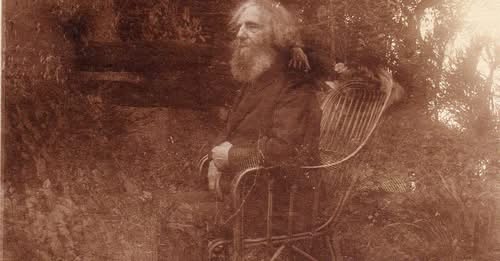
With charisma to spare: Franz Brentano, philosopher and psychologist, was an iconic teacher eclipsed by his students, Freud and Husserl among them.
Top o’ the Stack.
In memory of Susan Haack (1945-2026). We best honor a philosopher by reenacting in our own minds the philosopher’s thoughts, sympathetically, but critically. No sympathy, no understanding; no critique, no gain in understanding.
It is of course not enough for a nation to possess strength, its leader must be ready, willing, and able to exercise it at a moment’s notice. That exercise is war. We make war to achieve peace. Peace is the end of war in a two-fold sense: war’s cessation and war’s goal. We do not make war for the sake of war, but for the sake of peace.
But there is another view of war, the agonal view of Ernst Jünger (1895-1998). The following from Heinrich Meier, The Lesson of Carl Schmitt (University of Chicago Press, expanded ed., 2011, pp. 39-40, bolding added):
The opposition between agonal and political thought bears upon the meaning of war and the destiny of man. On the one hand, war is considered the expression of eternal coming to be and passing away and, since it is arising from the nature of man, is affirmed as such. On the other hand, it is regarded as a state that does not have its raison d’etre within but rather beyond itself. From this standpoint war is not the lord or king that allots each the share he is due as the result of free contest and the measuring of one’s strengths against others, but rather the slave in the service of a higher order. Over against the agonal principle, according to which man is not designed for peace, stands the political principle according to which man cannot achieve his destiny save by committing himself wholly and existentially to the realization of dominion, order, and peace. [Carl] Schmitt can speak of a “great metaphysical opposition” because he sees in agonal thought man’s attempt to give meaning, that is, to join in the cosmic play, and sould the greatest succeed, to fight a good fight, whereas he believes he sees the the most profound basis of political thought in the dependence of everything on whether one takes up the fight for the sake of the good and withstands it as a divine trial.
Top o’ the Stack.
On the dropping of names of philosophers one hasn’t read.
You can’t call me narrow in my interests. (Well, you can, but you would not be justified in doing so.) One day I’m writing about autoerotic asphyxiation, the next about Meinong’s Gegenstandstheorie.
“Specialization is for insects.” (Robert A. Heinlein)
Substack latest. On making good use of your time in the body.
To promote independent thought about ultimates. Philosophy, commentary on the passing scene, and whatever else turns my crank. Since 4 May 2004. By William F. Vallicella, Ph.D., Gold Canyon, Arizona, USA. Motto: “Study everything, join nothing.” (Paul Brunton) Latin Motto: Omnia mea mecum porto. Turkish motto: Yol bilen kervana katilmaz. (He who knows the road does not join the caravan.) All material copyrighted.
William F. Vallicella quoted from http://maverickphilosopher.powerblogs.com/posts/chain_1130361909.shtml
Answering Some Objections to Substance Dualism #1
1. It is plain that consciousness depends very sensitively on the physical state of the brain. Twiddling this or that neuron can induce memories, qualia, feelings, behavior, etc. Why is this the case, if our minds aren’t simply something the brain is doing? Consciousness can be wiped out by tiny brain lesions, and personalities can be fundamentally altered by damage to the brain.
2. How is the mind connected to the brain? How is the causal linkage of a nonmaterial entity to the macroscopic physical world achieved, without violating all sorts of conservation principles?
3. Where does the mind arrive from? At what point in embryonic development does the “ensoulment” take place? At what point in our evolutionary history? And if you have an answer for that, why then?
All of these problems seem more tractable from a physicalist point of view, and as I have said, I have heard no offers of any explanations at all from the dualist camp.
Since blogposts are supposed to be short, I will answer only the first objection in this post.
Ad 1. There are certain data that no one will dispute, whether materialist, dualist, or idealist. Among these data are the various correlations to which Malcolm is referring: stimulate this portion of the visual cortex in such and such a way and the subject experiences phenomenal blue, etc. Intelligent dualists have always been aware of such basic facts as that drinking alcohol alters the quality of one’s qualia, that a blow to the head can cause unconsciousness, and the like. It is important to realize that dualists are not in the business of denying obvious facts. The questions are not about the gross facts, but about their interpretation, about what they mean and what they entail. Hence dualists cannot be refuted by citing any obvious facts. Indeed, if dualism could be refuted by citing empirical facts, it would not be a philosophical thesis at all.
I stress this, because many don’t understand it. They think that substance dualists deny facts that are well-known or scientifically established. One commenter, for example, compared substance dualists to flat-earthers — which of course shows total misunderstanding.
“Why is this the case, if our minds aren’t simply something the brain is doing?” Because it could be the case even if our minds are not simply something the brain is doing. If substance dualism is true, then the mind is a substance. But note the following definition:,
D1. X is a substance =df X is metaphysically capable of independent existence.
(D1) lays down what is meant by ‘substance’ in discussions about substance dualism in the philosophy of mind. That and that alone is what is meant by the term.
Note also that ‘substance’ has a half-dozen or so meanings, and that in this context, ‘substance’ does not mean stuff. Thus the dualist cannot be blown out of the water by some such cheap shot as saying that he is committed to something self-contradictory like immaterial matter. (Not that Malcolm would reach for such a cheap shot.)
So for the dualist, the mind can exist without being embodied. But my mind, with which I am rather well acquainted, is an embodied mind. It is embodied as a matter of contingent fact, though not as a matter of metaphysical necessity. So it is not surprising that what goes on in my mind affects and is affected by what goes on in my brain and central nervous system. It is not surprising that the states of an embodied mind will be affected by alcohol in the bloodstream. In general, it is not suprising that (some) changes in the brain will bring about changes in the mind.
Since the facts that Malcolm adduces can be explained both materialistically and dualistically,, his adducing of said facts does not support materialism over dualism. Since the facts are consistent with both schemes, they do not entail either scheme.
So what Malcolm says in #1 is not a good reason to reject dualism. Of course, what I said in rebuttal does not provide a good positive reason to accept dualism over materialism. What I have done is merely remove a threat to the rationality of dualist belief.
(hide)
Posted by William F. Vallicella on Wednesday October 26, 2005 at 2:25pm.
Answering Some Objections to Substance Dualism #2: Interaction
Malcolm Pollack asks:
2. How is the mind connected to the brain? How is the causal linkage of a nonmaterial entity to the macroscopic physical world achieved, without violating all sorts of conservation principles?
Malcolm is here alluding to a standard objection, endlessly repeated by Dennett, Searle, et al., that is supposed to blow the substance dualist out of the water. To be clear, what we are talking about is interactionist substance dualism. One can be a substance dualist in the philosophy of mind without being an interactionist by being either a parallelist or an occasionalist. Note also that one can be a dualist in the philosophy of mind without being a substance dualist by being a property dualist. Note finally that one can be a dualist without being a dualist in the philosophy of mind. If, to save bytes, I write ‘dualist,’ that’s elliptical for interactionist substance dualist in the philosophy of mind.
Now what exactly is the objection? It seems to be this. If mind and body belong to mutually irreducible ontological categories, and yet minds and bodies interact causally, then this violates conservation principles. For example, if my intention to paint the bathroom is an irreducibly mental state that causes the states of the brain that control the motions of my limbs, then there is presumably a transfer of energy into what is supposed to be a closed physical system in violation of the principle of conservation of energy.
The trouble with this objection is that it blatantly begs the question against the dualist by presupposing a transfer theory of causation that makes dualist interaction impossible from the outset. Obviously, there could be a violation of conservation principles only if causation is being viewed as the transfer of some physical magnitude.
But it is not at all clear that causation involves such transfer even among physical causes and physical effects. There are several theories of causation. Many empirically-minded philosophers, following in the footsteps of Hume, adopt some version of the Regularity Theory, the gist of which is this:
Event-token e (directly) causes event-token f =df (i) e and f are spatiotemporally contiguous; (ii) e occurs earlier than f; (iii) e and f are subsumed under event-types E and F that are related by the de facto generalization that all events of type E are followed by events of type F.
On this theory, what distinguishes a causal event-sequence from a non-causal one is nothing more than the former’s instantiation of a regularity. Causation ‘in the objects’ is just regular succession, just one event after another. Accordingly, nothing gets transferred or transmitted from cause to effect. On this theory of causation, the above objection to mental-physical and physical-mental causation collapses.
Of course, there are powerful objections to the Regularity Theory. But there are other theories on which mental-physical and physical-mental causation are unproblematic. On a counterfactual theory,
e causes f =df if e had not occurred, f would not have occurred.
Here too, there is no need for any transfer of a physical magnitude and hence no threat to conservation principles.
But suppose that, in the physical world, causation is a process that involves physical contact and the transfer of energy, momentum, or whatever from the cause to the effect. If causation is such a physical process, then it will be a spatiotemporally continuous one and one can attempt to trace the mechanism whereby the cause brings about the effect. But mental-physical causation is direct: there is no intervening mechanism. To demand that there must be one in the mental-physical case as in the physical-physical case is just to rule out by fiat mental-physical causation.
Why then should there be any problem with a mental state directly causing a physical state? Once one has a specification of the relevant causal properties and the covering law, what more could one ask for?
In sum, the above objection unwarrantedly assumes that causation must in every case involve transfer of some physical magnitude. But it may be that causation never involves such transfer, or it may be that it involves such transfer only in the physical-physical cases. To make the above objection stick, therefore, one must do a lot of work; one must articulate a tenable transfer theory of causation. What one cannot do is simply repeat the canard given at the outset.
(hide)
Posted by William F. Vallicella on Friday October 28, 2005 at 6:18pm.
The Spook-Stuff Chronicles: Danny Dennett Meets Casper the Friendly Ghost
There are philosophers who seem to think that doctrines held by great philosophers and outstanding contemporaries don’t need to be studied and refuted but can be shamed or ridiculed or caricatured out of existence. Daniel Dennett is an example:
Dualism (the view that minds are composed of some nonphysical and utterly mysterious stuff) . . . [has]been relegated to the trash heap of history, along with alchemy and astrology. Unless you are also prepared to declare that the world is flat and the sun is a fiery chariot pulled by winged horses — unless, in other words, your defiance of modern science is quite complete — you won’t find any place to stand and fight for these obsolete ideas. (Kinds of Mind, Basic Books, 1996, p. 24)
This is an amazing passage in that it compares the views of distinguished dualist philosophers such as Richard Swinburne to the views of astrologers, alchemists, and flat-earthers. It would be very interesting to hear precisely how the views of Swinburne et al. are in “defiance of modern science” — assuming one doesn’t confuse science with scientism. But let’s look at what Dennett has to say in his more substantial (511 page!) Consciousness Explained (1991).
Dennett there (mis)characterizes dualism as the doctrine that minds are “composed not of ordinary matter but of some other, special kind of stuff. . . ,” and materialism as the view that “there is only one sort of stuff, namely matter — the physical stuff of physics, chemistry, and physiology — and the mind is nothing but a physical phenomenon.” (33) “In short, the mind is the brain.” (33)
But as I have said before,
A substance dualist such as Descartes does not hold that minds are composed of some extraordinarily thin intangible stuff. The dualism is not a dualism of stuff-kinds, real stuff and spooky stuff. ‘Substance’ in ‘substance dualism’ does not refer to a special sort of ethereal stuff but to substances in the sense of individuals capable of independent existence whose whole essence consists in acts of thought, perception, imagination, feeling, and the like. Dennett is exploiting the equivocity of ‘substance.’
The point is made very well by the prominent idealist, T. L. S. Sprigge:
It is often difficult to get people to realize that the non-physical mind of which Cartesians speak is not, as some have thought it, ‘a ghost in the machine’ of the human body, since ghosts and ‘spirits’ such as might appear in a seance are, in contrast to it, as physical, if made of a finer stuff, as our ordinary bodies. When we speak of the mental we do so mostly or entirely in metaphors (more or less sleeping) of a physical kind: we grasp ideas and have thoughts in our minds. Whatever the real source of this materialism which is endemic to most of our thinking, it is not surprising that there should be a theory of existence which follows its leadings. As thinkers we are subjects, but the natural object of thought is objects and it is only with effort that the subject turns its thoughts upon its own un-object-like nature. (Theories of Existence, pp. 46-47, bolding added.)
Dennett Plays the Interaction Card (Canard?)
Now Dennett trots out the “standard objection to dualism” which to Dennett is decisive. Ignoring non-interactionist types of substance dualism, Dennett tells us that mind and body, if distinct things or substances, must nonetheless interact. But how could the mind act upon the brain? How could a mental make a difference to a brain state if mental states lack physical properties?
A fundamental principle of physics is that any change in the trajectory of any physical entity is an acceleration requiring the expenditure of energy, and where is this energy to come from? It is this principle of the conservation of energy that accounts for the physical impossibility of “perpetual motion machines,” and the same principle is apparently violated by dualism. This confrontation between quite standard physics and dualism . . . is widely regarded as the inescapable and fatal flaw of dualism. (35)
Now any unprejudiced person should be able to see that this “fatal objection” is inconclusive. Notice first of all that Dennett is presupposing that mental-physical causation must involve transfer of energy. For Dennett’s objection is essentially this:
a. Energy must be transferred to a physical entity to cause a change in it.
b. No energy can be transferred from an immaterial to a material entity.
Therefore
c. No immaterial entity such as a mind can cause a change in a material entity such as a brain/body.
But why should we accept the first premise? Why should we endorse a transfer theory of causation? Note that to assume a transfer theory of causation is to beg the question against the dualist: it is to assume that the mind must be material. For only a material thing can be a term in an energy transfer. Dennett thinks that dualism must collide with standard physics because he foists upon the dualist a conception of causation that the dualist will surely reject, a conception of causation that implies that there cannot be any nonphysical causes.
The materialist says: mind and body cannot interact because interaction requires transfer of energy, and only bodies can be the transferers and transferees of energy.
The interactionist dualist says: Since mind and body do interact, interaction does not require transfer of energy.
Let M be a type of mental event and B a type of brain event, and let m and b be tokens of these types. Perhaps there is nothing more to causation than this: m causes b =df (i) b follows m in time; (ii) Whenever an M event occurs, a B event occurs. On this regularity approach to causation, Dennett’s objection dissolves.
Indeed, on any theory of causation in which causation does not consist in a transfer of a physical magnitude from cause to effect, Dennett’s objection dissolves. Therefore, the objection can be made to stick only it is assumed that the transfer theory of causation is true of all types of causation. But then the question has been begged against dualist interaction.
There are two key points here that need to be developed in subsequent posts. One is that the nature of causation is not a physics problem. The natural scientist can tell us what causes what, but he is singularly ill-equipped to tell us what causation is. The second point is that it is not at all clear that causation, even in the physical world, is a physical process. It is not all clear, in other words, that the causal structure of the physical world is itself something physical.
Dennett thinks that the incoherence of dualism is so obvious that it doesn’t require “the citation of presumed laws of physics.” (35). Casper the Friendly Ghost is all the help one needs. He can pass through a wall, yet grab a falling towel. But that’s incoherent, since something that eludes physical measurement cannot have physical effects. The mind, as ‘ghost in the machine,’ is no better off. Only physical things can move physical things. But the mind of the substance dualist is not a physical thing, ergo, the mind cannot act upon the body.
But again, Dennett is just begging the question against the dualist as I have already explained.
(hide)
Posted by William F. Vallicella on Monday October 31, 2005 at 4:55pm
What I am Trying to Accomplish Dialectically Speaking
In my various debates with people about the mind-body problem and other philosophical questions, what am I trying to achieve? Well, I am NOT trying to convert them to my views, which are held tentatively in any case. Thus in the case of Malcolm Pollack, an eager and able opponent, I am not trying to get him to abandon his brand of materialism and accept some form of dualism or idealism or anything else.
(show)
Posted by William F. Vallicella on Thursday November 3, 2005 at 12:57pm.
Ducasse on Mind-Body Interaction, Conservation of Energy, and the Closure of the Physical Domain
A standard objection to interactionist substance dualism is that mind-body interaction violates the principle of the conservation of energy. In my opinion, anyone who finds this objection decisive is not thinking very hard. Let’s consider what C. J. Ducasse once said on the topic:
. . . The objection to interactionism that causation, in either direction, as between psychical [mental] and physical events is precluded by the principle of the conservation of energy (or of energy-matter) is invalid for several reasons.
A. One reason is that the conservation which that principle asserts is not something known to be true without exception but is . . . only a defining-postulate of the notion of a wholly closed physical world, so that the question whether psycho-physical or physico-psychical causation ever occurs is (but in different words) the question whether the physical world is wholly closed. And that question is not answered by dignifying as a “principle” the assumption that the physical world is wholly closed.
B. Anyway, as C. D. Broad has pointed out, it might be the case that whenever a given amount of energy vanishes from, or emerges in, the physical world at one place, then an equal amount of energy respectively emerges in, or vanishes from that world at another place.
C. And thirdly, if “energy” is meant to designate something experimentally measurable, then “energy” is defined in terms of causality, not causality in terms of transfer of energy. That is, it is not known that all causation, or, in particular, causation as between psychical and physical events, involves transfer of energy. (Curt Ducasse, “In Defense of Dualism” in Sidney Hook, ed., Dimensions of Mind, Collier 1961, pp. 88-89)
I will now proceed seriatim through these points, supplying my own interpretation of them.
Ad (A). Any physicalist worth his salt will uphold the causal closure of the physical domain. That is just part (though not the whole) of what it means to be a physicalist. Borrowing from Jaegwon Kim, the principle may be stated thusly: Any physical event that has a cause at time t, has a physical cause at t. You QM enthusiasts out there will please note that this does not imply that every physical event has a cause. Note also that Kim’s formulation seems to allow for irreducibly mental events as causes of physical events. But if a physical event e is a sufficient cause of a physical event f, then any mental cause m of f will just be epiphenomenally along for the ride, if you catch my drift. In other words, m won’t do any work.
Adding to Kim’s formulation the notion that physical causes are sufficient for their physical effects yields a robust notion of causal closure. Robustly understood, the causal closure of the physical domain amounts to the thesis that all the causal work that gets done in the physical domain is done by physical events; if there are any irreducibly mental events, they don’t do any work in the physical domain.
Ducasse’s first argument, then, may be understood as follows. Appeal to conservation of energy is equivalent to appeal to causal closure of the physical. But one who objects to interactionist dualism on this basis begs the question against it by assuming the truth of a principle (causal closure) that immediately entails the falsity of interactionism.
The objection from conservation/closure is therefore not decisive against the interactionist. It would be decisive if the closure principle were known to be true. But that would be tantamount to knowing that physicalism is true. But we don’t know it to be true. Of course, physical science proceeds by searching for physical causes. That is the kind of game it plays. Its procedure is methodologically naturalistic. But there is a logical gap between methodological and substantive naturalism.
Ad (B). I don’t find Ducasse’s second point all that impressive. Assume conservation of energy. Then, if causation involves transfer of energy, and some mental events are causally efficacious in the physical domain, then energy must enter the physical domain at some point, call it the locus of interaction. Does this violate conservation of energy? Only if it is assumed that energy does not vanish at some other point. Since this is logically possible, the objection is not decisive. In other words, there could be a net conservation of energy or matter-energy in a system in which energy arose and vanished in different places.
Ad (C). Assume the causal closure of the physical domain. One could still be an interactionist dualist by denying that mental-physical causation involves transfer of a physical magnitude such as energy. Of course, if we know that every instance of causation is an instance of energy transfer, then of course we know (via some simple inferences) that mental-physical causation is impossible. But we don’t know this. Therefore, to object to interactionism on the ground that all causation involves energy transfer is to beg the question against the interactionist.
Note the difference between the first and third objections. The first objection begs the question against the interactionist by assuming that it is known that the physical domain is causally closed. The third objection begs the question by assuming that it is known that causation always involves energy transfer.
It looks like we ought to distinguish between the interactionist who accepts a transfer theory of causation but rejects causal closure, and the interactionist who accepts causal closure but rejects a transfer theory of causation.
Ducasse also alludes to the following point. Isn’t transfer itself a causal notion? How then can causation be analyzed in terms of transfer? Even if every instance of causation were an instance of energy transfer, that would not entail that causation consists in energy transfer. But this is a subtle point best reserved for a separate post.
(hide)
Posted by William F. Vallicella on Saturday November 5, 2005 at 4:09pm.
Dean’s Ducasse Ditty
From Dean Zimmerman’s Philosophical Clerihews page:
Although it hurt Curt Ducasse
to be kicked in the ass,
he was filled with elation
at the observability of the causal relation.
(Hyperlinks added.)
Though Halloween is past, the spirit remains, so:
Escaping at night from the embalmer’s,
The zombies sought help from Dave Chalmers.
Though their speech was mere echolalia,
He knew what they wanted: dancing qualia.
Posted by William F. Vallicella on Saturday November 5, 2005 at 4:24pm.
Edward Feser at X:
Unbelievably reckless and immoral. As the Catholic philosopher Elizabeth Anscombe warned, the demand for unconditional surrender is a recipe for increasing rather than decreasing the tenacity of an enemy’s resistance, which will in turn tempt us to deploy ever more barbaric methods of warfare yielding ever higher numbers of civilian casualties. This was what led to the abominations of Hiroshima and Nagasaki. People say “If we hadn’t done that, the invasion of Japan would have been a bloodbath.” But that presupposes that an invasion aimed at securing unconditional surrender was necessary and justifiable in the first place, which it was not. That an enemy nation has done wrong does not entail a right to demand that it put itself totally under our control . . . .
Feser, drawing upon Anscombe, is making an important point. If the adversary in an armed conflict acquiesces in the demand for unconditional surrender, the adversary not only surrenders but does so in such a way as to permit the enemy to do whatever it wants to the subjugated entity, including slaughtering the latter’s entire population. This is a purely conceptual point that merely unpacks the meaning of ‘unconditional surrender.’ Call it P1.
But the leaders of no entity on the losing side of an armed conflict, least of all the Islamist entity, will agree to that, assuming that they are sane and not suicidal. Call this point P2. And so the likely, but not inevitable, effect of the demand for unconditional surrender will be to increase the tenacity of the losing entity’s resistance in almost every conceivable case. Call this proposition P3. So far, so good. Feser is on solid ground, and I agree.
But there is no necessity that the party making the demand for unconditional surrender will go on to commit atrocities to enforce compliance with the demand for unconditional surrender. In fact, the U.S. demand for U.S. — pun intended — might well be a blustery move, a feint, on Trump’s part as one might expect from such a macher who is also notoriously sloppy in his use of words. The man is a crafty transactional pragmatist who scorns the typical political and diplomatic protocols and who likes outsmarting and out-psyching his enemies.
So why is the demand for unconditional surrender immoral? How does one validly move from the conjunction of P1 and P2 and P3 to the conclusion that the demand for unconditional surrender is immoral, as Feser claims it is?
Am I missing something? (I wouldn’t put it past myself.)
James Talarico’s Backward Christianity (First Things)
Top o’ the Stack.

I ran into these friendly characters the other morning during my daily constitutional. Curtis and Barry looked like they needed some exercise so I conducted them on a steep climb over Jake’s Saddle in the hills behind my house. Here we are at the top of the saddle. The trail drops down behind us giving the appearance that I am shorter than I am .
A good time was had by all. I couldn’t help bringing up the Coen Bros. movie, “Fargo,” now thirty years in the past. They had seen it, of course. But these boys had never seen the “The Man Who Wasn’t There,” my favorite of the Coen offerings.
Just this morning I found Every Coen Brothers Movie, Ranked. Synchronicity?
Bob Dylan, The Man in Me