Josiah Royce and the Paradox of Revelation

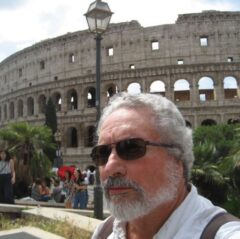
James and RoyceThere are tough questions about the possibility and the actuality of divine revelation. An examination of some ideas of the neglected philosopher Josiah Royce (1855-1916) from the Golden Age of American philosophy will help us clarify some of the issues and problems. One such problem is this: How can one know in a given case that a putative piece of divine revelation is genuine? Before advancing to this question we need a few sections of stage-setting.  (That's Royce on the right, by the way, and William James on the left.  Surely it was degeneration when American philosophy came to be dominated by the likes of Quine and Rorty.) 

1. Concern for Salvation as Essential to Religion. It is very difficult to define religion, in the sense of setting forth necessary and sufficient conditions for the correct application of the term, but I agree with Royce's view that an essential characteristic of anything worth calling religion is a concern for the salvation of man. (The Sources of Religious Insight, Charles Scribner and Sons, 1912, p. 8) Religious objects are those that help show the way to salvation. The central postulate of religion is that "man needs to be saved." (8-9) Saved from what? ". . . from some vast and universal burden, of imperfection, of unreasonableness, of evil, of misery, of fate, of unworthiness, or of sin." (8) In an earlier post on Simone Weil I spoke of generic wretchedness. It is that which  we need salvation from.

2. The Need for Salvation. "Man is an infinitely needy creature." (11)  But the need for salvation, for those who feel it, is paramount among human needs. The need for salvation  depends on two simpler ideas:

a) There is a paramount end or aim of human life relative to which other aims are vain. (12)

b) Man as he now is, or naturally is, is in danger of missing his highest aim, his highest good. (12)

To hold that man needs salvation is to hold both of (a) and (b). I would put it like this. The religious person perceives our present  life, or our natural life, as radically deficient, deficient from the root (radix) up, as fundamentally unsatisfactory; he feels it to be, not a mere condition, but a predicament; it strikes him as vain or empty if taken as an end in itself; he sees himself as homo viator, as a wayfarer or pilgrim treading a via dolorosa through a vale that cannot possibly be a final and fitting  resting place; he senses or glimpses from time to time the possibility of a Higher Life; he feels himself in danger of missing out on this Higher Life of true happiness. If this doesn't strike a chord in you, then I suggest you do not have a religious disposition.  Some people don't, and it cannot be helped.  One cannot discuss religion with them, for it cannot be real to them.  It is not, for them, what William James in "The Will to Believe" calls a "living option," let alone a "forced" or "momentous" one. 

3. Religious Insight. Royce defines religious insight as ". . . insight into the need and into the way of salvation." (17) No one can take religion seriously who has not felt the need for salvation. But we need religious insight to show that we really need it, and to show the way to it.

4. Royce's Question. He asks: What are the sources of religious insight? What are the sources of insight into the need and into the way of salvation? Many will point to divine revelation through a scripture or through a church as the principal source of religious insight. But at this juncture Royce discerns a paradox that he calls the religious paradox, or the paradox of revelation.

5. The Paradox of Revelation. Suppose someone claims to have received a divine communication regarding the divine will, the divine plan, the need for salvation, the way to salvation, or any related matter. This person can be asked, "By what marks do you personally distinguish a divine revelation from any other sort of report?" (22-23) How is a putative revelation authenticated? By what marks or criteria do we recognize it as genuine? The identifying marks must be in the believer's mind prior to his acceptance of the revelation as valid. For it is by testing the putative revelation against these marks that the believer determines that it is genuine. One needs "a prior acquaintance with the nature and marks and, so to speak, signature of the divine will." (p. 25) But how can a creature who needs saving lay claim to this prior acquaintance with the marks of genuine revelation?

The paradox in a nutshell is that it seems that only revelation could provide one with what one needs to be able to authenticate a report as revelation:

Faith, and the passive and mysterious intuitions of the devout, seem to depend on first admitting that we are naturally blind and helpless and ignorant, and worthless to know, of ourselves, any saving truth; and upon nevertheless insisting that we are quite capable of one very lofty type of knowledge — that we are capable, namely, of knowing God's voice when we hear it, of distinguishing a divine revelation from all other reports, of being sure, despite all our worthless ignorance, that the divine higher life which  seems to speak to us in our moments of intuition is what it  declares itself to be. If, then, there is a pride of intellect, does there not seem to be an equal pride of faith, an equal pretentiousness involved in undertaking to judge that certain of our least articulate intuitions are infallible?

Surely here is a genuine problem, and it is a problem for the reason. (103)

Is it a genuine problem or not? Can a church's teaching authority be invoked to solve the problem? Suppose a point of doctrine regarding salvation and the means thereto is being articulated at a church council. The fathers in attendance debate among themselves, arrive at a result, and claim that it is inspired and certified by the Holy Spirit. By what marks do they authenticate a putative deliverance of the Holy Spirit as a genuine deliverance? How do they know that the Holy Spirit is inspiring them and not something else such as their own subconscious desire for a certain result? But this is exactly Royce's problem.

UPDATE: Joshua Orsak responds:

It has been a long time since I've emailed anything to you. I recently read your post on the paradox of revelation. It is a subject I've thought a lot about, and one I've been particularly thinking about the last few days, serendipitously. It seems to me an intractable problem. One cannot claim to KNOW one has received a genuine revelation. One can, I think, only reasonably believe it.
 
It seems to me that when confronted with what appears to be a revelation from God, one is put in a position where one has to choose whether or not one believes. If the revelation is of what it appears to be, then one can believe that the God who has reached out to one has also put one in a position to be able to receive a revelation. But this kind of trust is invariably, to some degree, volitional. One of my favorite short stories, is Dostoevsky's THE DREAM OF A RIDICULOUS MAN. The main character seems to know it is 'ridiculous' to change one's entire life and worldview because of a dream, but I gather the point is, in essence, 'but let it happen to you and see what you believe.'
 
If one has the experience of being transformed in mind and spirit by the Holy Spirit, and also of being contacted in some way by the same Spirit, one can reasonably choose to believe that this experience, both partial regeneration and revelation, are genuine. But one cannot, I think, claim to ever know with certainty that this is genuine. For the very reasons you mention.
I think Rev. Orsak has given us the right answer to Royce's paradox.

Jack Kerouac: A Buddhist Wanderer Comes Home

Jack Kerouac quit the mortal coil 45 years ago today, securing his release from the wheel of the quivering meat conception, and the granting of his wish:

The wheel of the quivering meat conception . . . . . . I wish I was free of that slaving meat wheel and safe in heaven dead.  (Mexico City Blues, 1959, 211th Chorus).

The Last Interview, 12 October 1969.  "I'm not a beatnik. I'm a Catholic."  "I just sneak into church now, at dusk, at vespers. But yeah, as you get older you get more … genealogical."

As much of a screw-up and sinner as he was, as irresponsible, self-indulgent, and self-destructive, Kerouac was a deeply religious man.  He went through a Buddhist phase, but at the end he came home to Catholicism.

Continue reading “Jack Kerouac: A Buddhist Wanderer Comes Home”

Why Lichtenberg is not on Facebook

Georg Christoph Lichtenberg, The Waste Books, tr. R. J. Hollingdale, New York Review Books, 1990, p. 162, Notebook J, Aph. #168, hyperlink added!

As soon as he receives a little applause many a writer believes that the world is interested in everything about him.  The play-scribbler Kotzebue even thinks himself justified in telling the public that he administered a clister [an enema] to his dying wife.

Extrovert versus Introvert: The Introvert Speaks

Introvert extrovertThe extrovert is like a mirror: being nothing in himself, he is only what he reflects.  A caricature, no doubt, but useful in delineation of an ideal type.  This is why the extrovert needs others.  Without them, he lacks inner substance.  This is also why he is not drained by others, but drains them — like a vampire.  By contrast, the introvert, who has inner substance, loses it by social intercourse.  He is drained not merely of physical energy, but of spiritual integrity, inner focus, his very self.  The problem with socializing is not so much energy loss as self loss.  But one cannot lose what one does not have. 

The introvert cannot be himself in society but must sacrifice himself on the altar of Heidegger's das Man, the 'they self,' or social self.  The extrovert can only be himself and come to himself in society.  Whereas the introvert loses himself in society, the extrovert finds himself there.

If you infer the superiority of the introvert, I won't disagree with you.

The above cartoon nails it. 

Are you an introvert?  Take this test.

Kierkegaard was an archetypical introvert. 

UPDATE (11:55 AM):  It occurred to me that 'superficial extrovert' might count as a pleonastic expression.  Other polemical jabs:  'Extroverts are surface all the way down.' 'Extroverts aren't even shallow.'

Accepts the Apostles’ Creed, Balks at the Athanasian Creed: Second-Class Christian?

The following from a reader:

I have been accused, on a forum, of being a second-class Christian because I have stated that I cannot understand Trinitarian doctrine [as presented in the Athanasian creed]. I have stated that I do accept the Apostles' Creed, but that is not seemingly good enough. So I have asked for clarification from forumites as to why they believe not only that the doctrine is true, but that believing it is a must for 'full fellowship'.

My reader goes on to say that the responses of his fellow forum members were unsatisfactory. His main question is:  "What practical difference does a belief or non-belief in the Athanasian doctrine of the Trinity make?"  My reader accepts and tries to live by the the Apostles' Creed, but doesn't understand the Athanasian Creed.  As well as he might not, given the logical difficulties of the doctrine.

To answer the reader's question: no practical difference to speak of.

The underlying problem, as it seems to me, is that of the relative importance of doctrine and practice.   In every religion there is both.  Are they of equal importance?  Or is one more important that the other?  I suggest  that, while both are important,

1. Practice is more important than doctrine;

2. Theological doctrines are necessary makeshifts, feeble human attempts at conceptualizing what by its very nature must remain in the main beyond the human conceptual horizon in this life;

3. Doctrinal disputes can and often do lead to acrimonious controversies that are the exact opposite of conducive unto salvation. 

The two central precepts of Christianity are:  Love God with your whole heart, whole soul, and whole mind, and love your neighbor as yourself.  What exactly is enjoined by these two absolutely central precepts  may be reasonably discussed, and ought to be.  But we know more or less what they mean and require of us. And we know more or less what would be incompatible with their practical realization.

To love God is not to love one's ideas about God.  For then one is loving, not God, but products of one's own ego.  A theologian in love with his own pet formulations is arguably a high-level idolater.  And analogously for the doctrinal formulations of one's church or sect.

And it would seem that bitter, rationally unresolvable dispute about exceedingly abstruse questions is not at all conducive to love of neighbor, and is in fact in many cases incompatible with such love.  Consider some such theological nicety as the filioque clause.  The question is whether the Holy Ghost proceeds from the Father and the Son — filioque means 'and the Son'  — or from the Father directly.  Quite apart from the question of what practical difference this could make in the life of a believer, does the question have a sense clear enough to permit a rational solution? 

The Athanasian Creed, quite unlike the Apostles' Creed,  makes subscription to verbally precise Trinitarian and Christological doctrines a necessary condition of salvation.  Their verbal precision, however, has not prevented centuries of debate as to their exact meaning and coherence.  To hurl an anathema at anyone who fails to accept them on pain of damnation strikes me as nothing more than an  expression of the human-all-too-human need for doxastic security.  People have a terribly strong need to be secure in their beliefs even when the beliefs in question are plainly open to serious doubt.

Mature religion, I would say, is more quest than conclusions.  

The Prescient Eric Hoffer

Eric hofferOn p. 176 of Working and Thinking on the Waterfront, a journal he kept from June 1958 to May 1959, Eric Hoffer complains that ideas do not gush from his mind, that his writing "lacks the quality of catharsis."  "Yet only writing — any sort of writing — can justify my existence."

He was an amazing man, perhaps the purest example of the autodidact in the 20th century.  He had no formal education whatsoever.  His analysis of the true believer enjoys currency again, 60 years after his first book appeared, in the age of militant Islam, or rather the present age of militant Islam.  Islam has been on the march before.  The barbarians are once again at the gates.  Is Rome the new Vienna?

More on the thinking stevedore in the aptly appellated Eric Hoffer category.

Saturday Night at the Oldies: Anti-Drug Songs

Sex, drugs, and rock & roll without the drugs.  In memory of the recently late Paul Revere of Paul Revere and the Raiders, a '60s outfit with a garage-band sound I never much liked, which had a hit with the anti-drug Kicks with which I shall kick off tonight's offerings.

Buffy Sainte-Marie, Cod'ine

An equally powerful version by Janis Joplin

Hoyt Axton, The Pusher

Dave Van Ronk, Cocaine Blues 

Velvet Underground, Heroin

Warren Zevon, Carmelita

Dubiously classified as drug songs:

Peter, Paul, and Mary, Puff the Magic Dragon

Doors, The Crystal Ship

Tim Hardin, Red Balloon.   Small Faces version. Hardin died of a heroin overdose in late December, 1980. 

Donovan, Mellow Yellow.  Supposedly about cigarettes filled with dried banana peels.  I tried one of these mellow yellow joints  in Hollywood, Cal, in '67.  It had no psychoactive effect I could discern.

Beatles, Lucy in the Sky with Diamonds.  Supposedly about LSD. 

UPDATE 10/19:  Jeff Hodges thinks I should have included Neil Young, Tonight's the Night.  He's right.

Dennis Monokroussos: 

No “Cocaine” by Eric Clapton?! That’s a huge and surprising omission, unless you don’t take it to be either pro- or anti-drug. Clapton himself calls it anti-drug, so perhaps a Sunday supplement should ensue. On the kudos side, I’m glad that you labeled “Puff” and “Lucy” as only dubiously classified as drug songs, as both songs’ authors have vehemently and repeatedly protested their songs’ innocence.

My title indicates that my focus is on anti-drug sons.  J. J. Cale's tune "Cocaine" is pretty clearly pro-drug, as witness the lyrics:

If you wanna hang out you've got to take her out; cocaine.
If you wanna get down, down on the ground; cocaine.
She don't lie, she don't lie, she don't lie; cocaine.

If you got bad news, you wanna kick them blues; cocaine.
When your day is done and you wanna run; cocaine.
She don't lie, she don't lie, she don't lie; cocaine.

If your thing is gone and you wanna ride on; cocaine.
Don't forget this fact, you can't get it back; cocaine.
She don't lie, she don't lie, she don't lie; cocaine.

True, Clapton has claimed that the song is anti-drug, but the claim is simply not credible.  Generally speaking, artists' opinions about their works are not to be given much credence.  Dylan is an example of one who has spoken nonsense about the meaning of his own songs.

Just read the above lyrics.  The meaning is clear.   You need cocaine to 'hang out' and to 'get down.'  The second phrase means to party, to have sex, to have a good time, to jump up and dance.  It does not mean to bring yourself down either physically or mentally.  But then why "down on the ground"?  Because it rhymes, and this is just a popular song the lyrics of which were scribbled in a couple of minutes.  To write a song like this you start with a chord progression and a guitar riff and then find some words to go along with them. 

And then we are told that cocaine "don't lie"; she takes you away from the phony workaday world of the uncool and puts you in touch with reality.  And in her embrace there is an escape from bad news and a cure for the blues.  If you've lost your 'mojo'  and its on the sag and your 'thing' is gone, you can get it back with this stuff.  And "she don't lie!"

There is simply no way this song could be interpreted as anti-drug.  It is pretty clearly, though not obviously, pro-drug.

Clapton ought to 'man up' and admit it.  Arguing that it is anti-drug would be like arguing that the Rolling Stones' Let's Spend the Night Together is a stern warning against premarital sex, or that their Under My Thumb is a feminist anthem.

That's why I didn't include Clapton's "Cocaine" on my list of anti-drug songs.

Georg Lichtenberg, Aphoristically, on the Freedom of the Will, with Commentary

Lichtenberg StampGeorg Christoph Lichtenberg, The Waste Books, tr. R. J. Hollindale, New York Review Books, 1990, pp. 161-162:

We know with much greater clarity that our will is free than that everything that happens must have a cause.  Could we therefore not reverse the argument for once, and say: our conception of cause and effect must be very erroneous because our will could not be free if our idea of cause and effect were correct?

This is essentially right and invites commentary.  Which of the following propositions is better known, more evident, more credible, or more likely to be true?


1. With respect to some actions and omissions, the human will is libertarianly free, free in the 'could have done otherwise' sense.

2. Every event, including every action and failure to act of a human person, is the terminus of a causal chain extending into the past to times prior to the person's birth, and every event is as such necessary given what has gone before.

Given that the propositions cannot both be true, if (1), then ~(2).  One can now argue either my modus ponens to (~2) or by modus tollens to (~1).  Lichtenberg is suggesting in effect that the modus ponens argument is to be preferred.

I agree.  For I know directly, in my own case, that I am morally responsible for some of my actions and failures to act, and that therefore I am free with respect to these actions and omissions.  This is surely better known than that every event is necessitated by earlier events, and that nothing I do or leave undone is ever something for which I am morally responsible.  The direct, first-person evidence trumps third-person considerations. If you balk at my use of 'know,' then I will say that it is more evident, clearer, more likely to be true, more credible, that I am free.

Think about it.  How do you know that every event has a cause that necessitates it?  It is not a conceptual or analytic truth like Every effect has a cause.  That's true ex vi terminorum. But there is nothing in the concept event or the meaning of 'event' that warrants the inference that every event has a cause.  Uncaused events are thinkable without contradiction.*  Nor do you know the relevant principle by experience.  Have you examined every event? No.  But even if you had examined every cause-effect sequence in the universe, you could not find the necessity by experience.  As Lichtenberg's man Kant famously said, "Experience teaches what is the case, but not what must be the case."    For Kant, the causal principle is synthetic a priori.  But now: how clear is the very concept of the synthetic a priori, first, and second, how clear is it that the causal principle is an instance of it?  And third, how clear are the pillars of the Kantian edifice that undergird the synthetic a priori? 

One might reach for inference to the best explanation.  What is the best explanation of the success of the natural sciences in the explanation, prediction, and control of natural phenomena?  That (macro)nature is  deterministic.  But the inference is shaky and less to be relied upon than the direct evidence that here and now I did something I (morally) should not have done, something I know I could have refrained from doing.

It is not absolutely self-evident that I am morally responsible and libertarianly free, but it is evident, and indeed more evident than the premises of any deterministic argument.  That's enough.

One should never philosophize in such a way that one denies or discounts the very phenomenological evidence that got us philosophizing in the first place.

And if I have good reason to believe that something is the case, then I have good reason whether or not I can solve every puzzle to which the thing gives rise.

You say free will is an illusion?  I say that that is nonsense and that you are playing fast and loose with 'illusion.'

_____________

*Of course I am not saying that my free actions are uncaused: an uncaused event is not eo ipso a free event.  My free actions are caused by me, the agent.  I am their creative source, their agent-cause.  The idea is not entirely clear, granted.  But it is even less clear that I am a deterministic system.

William Burroughs, London Ed, Patrick Kurp, and Literary Trash

JunkieI own the 1953 first-edition Ace Books paperback depicted to the left.  Price in 1953: 60 cents.   I must have acquired my copy in the late '60s or early '70s for not much more than that.  Originally published under the pen-name of William Lee, the "Old Bull Lee" of Kerouac's On the Road. The foreword is by Carl Solomon.  According to the Wikipedia article just referenced, Solomon is also responsible for the Publisher's Note which serves in part as an apologia for the "sordid" narrative about to be put before the reader. 

Remember, this is 1953, a time and place light-years from the present, culturally speaking.  What would be celebrated as 'transgressive' today by our benighted cultural elites, was recognized then as trash whose publication had to be justified:

We realized that here was a document which could forearm the public more effectively than anything yet printed about the drug menace.  The picture it paints of a sordid netherworld was all the more horrifying for being so authentic in language and point of view.  For the protection of the reader, we have inserted occasional parenthetical notes to indicate where the author clearly departs from accepted medical fact or makes other unsubstantiated statements in an effort to justify his actions.

London Ed, taking a break from logic and philosophy of language, is now reading Burroughs:

I finished Junky, which was entertaining, and now onto Naked Lunch, which is terrible. Meanwhile, some extracts from Junky below, which challenge the idea that Burroughs was some kind of ‘gay writer’. Obviously he was gay, although he predates that term, and would have called himself ‘queer’. He alludes to his queerness in the book, but I find the passages below difficult to explain.  They are surely not intended as ironic, there is a real hatred, possibly self-hatred there.  I can find no critical study of Burroughs that mentions these passages.

The only equivalent I can think of for that period is Raymond Chandler. Supposedly Chandler was a repressed homosexual.  But there is the same ‘homophobic’ streak in his work. You recall the Geiger character in The Big Sleep, who is characterised as both homosexual and unpleasant. Chandler writes somewhere about there being ‘no iron’ in a ‘fairy's’ punch, and about the vicious and unpleasant way that a ‘fairy party’ can end. I will try and find the quotes. In the same place I also have quotes from William Cobbett (supposed father of English socialism) which are virulently anti-semitic.

Burroughs quotations culled by Ed:

The hipster-bebop junkies never showed at 103rd Street. The 103rd Street boys were all old timers — thin, sallow faces; bitter, twisted mouths; stiff-fingered, stylized gestures. (There is a junk gesture that marks the junky like the limp wrist marks the fag: the hand swings out from the elbow stiff-fingered, palm up.)

In the French Quarter there are several queer bars so full every night the fags spill out on to the sidewalk. A room full of fags gives me the horrors. They jerk around like puppets on invisible strings, galvanized into hideous activity that is the negation of everything living and spontaneous. The live human being has moved out of these bodies long ago. But something moved in when the original tenant moved out. Fags are ventriloquists' dummies who have moved in and taken over the ventriloquist. The dummy sits in a queer bar nursing his beer, and uncontrollably yapping out of a rigid doll face.

Occasionally, you find intact personalities in a queer bar, but fags set the tone of these joints, and it always brings me down to go into a queer bar. The bringdown piles up. After my first week in a new town I have had about all I can take of these joints, so my bar business goes somewhere else, generally to a bar in or near Skid Row.

[…]

I ordered a drink at the bar and looked around. Three Mexican fags were posturing in front of the jukebox. One of them slithered over to where I was standing, with the stylized gestures of a temple dancer, and asked for a cigarette. There was something archaic in the stylized movements, a depraved animal grace at once beautiful and repulsive. 1 could see him moving in the light of campfires, the ambiguous gestures fading out into the dark. Sodomy is as old as the human species. One of the fags was sitting in a booth by the jukebox, perfectly immobile with a stupid animal serenity.

[…]

I looked around and noticed how the hips stood out as a special group, like the fags who were posturing and screeching in one comer of the yard. The junkies were grouped together, talking and passing the junkie gesture back and forth, the arm swinging out from the elbow palm up, a gesture of separateness and special communion like the limp wrist of the fag.

And now this from Patrick Kurp:

I’m reading more than at almost any time in my life but spending less time reading online. The two facts have a common source – a festering impatience with shoddy writing. My literary gut, when young, was goat-like — tough and indiscriminate. I read everything remotely of interest and felt compelled to finish every book I started. This makes sense: Everything was new, and how could I knowledgeably sift wheat from chaff without first milling, baking and ingesting? Literary prejudice, in a healthy reader, intensifies with age. I know and trust my tastes, and no longer need to read William Burroughs to figure out he wrote sadistic trash.

I've read my fair share of Burroughs and I concur that his stuff is trash: Junkie, Naked Lunch, The Soft Machine, Exterminator.  All in my library.  But there is a place for literary trash.  It has its uses as do the pathologist's  slides and samples.  But put on your mental gloves before handling the stuff. 

Kerouac alone of the Beat Triumvirate moves me, though I surely don't consider him a great writer.  In fact, I would go so far as to say that there really shouldn't be any university courses on Kerouac or Dylan or other culturally influential recent figures since their material is easily accessible and easily understandable.  Universities ought not pander. They should remain — or rather return to being — institutions whose sacred task is the preservation and transmission of HIGH culture, great culture, culture which is not easily understood and requires expert guidance to penetrate and appreciate.  The thought is extended in Inheritance and Appropriation.

Kurp also has this to say:

We associate pieties with sentimental religion, holy medals and such, when in fact they often arrive in the form of sociopathic earnestness. Take Williams Burroughs – not the sort of fellow you would have wanted living next door. Burroughs was a deviant by any standard – a thief, a wife-killer, an Olympic-class drug abuser, a sexual pervert and a man who seldom failed to indulge any hateful impulse that entered the black hole of his egotism. As a writer, Burroughs celebrated his pathologies and never transcended his pulp origins – all good career moves in an age when professors and critics use “transgressive” as an accolade.

A Part-Time Monk’s Solution to Suggestibility

We are too open to social suggestions.  We uncritically imbibe dubious and outright wrong views and attitudes and valuations and habits of speech from our environment.  They don't appear wrong because they are in step with what most believe and say.  'Normal' beliefs and patterns of speech become normative for people.  This is the way of the world.  We are too suggestible.

Thus nowadays people cannot see that lust and gluttony are deadly vices.  The weight of suggestion  is too onerous.  The counter-suggestions from a religious upbringing are no match for the relentless stuff emanating from the mass media of a sex-saturated, hedonistic society.  For spiritual health a partial withdrawal from society is advisable.  It needn't be physical: one can be in the world but not of it. 

A partial withdrawal can take the form of a holding free of the early morning hours from any contamination by media dreck.  Thus no reading of newspapers, no checking of e-mail, no electronics of any sort.  Electricity is fine: you don't have to sit in the dark or burn candles.  No talking or other socializing. Instead: prayer, meditation, spiritual reading and writing, in silence, and alone.

So for a few pre-dawn hours each day you are a part-time monk.

But society and technology are in conspiracy against you.  Have you noticed that the newer modems are not equipped with on/off switches?  A bad omen for the life of the soul and the care thereof.  I cannot abide a wi-fi signal during my sleeping and monkish hours.  So I bought an extra power strip and put that in series with the modem and the main power strip.  Wifey is instructed to turn it off before she goes to bed.  And of course all computers and cell phones are off during the night and the hours of monkishness.

Novels

I am nearing the end of Patrick Hamilton's Hangover Square, and yesterday I began John Fante's Full of Life.  D. G. Myers' review begins and ends like this:

In the Manchester Guardian’s book blog, Rob Woodard looks back at John Fante’s Ask the Dust, a 1939 novel which has been described as a masterpiece. Everyone seems quite taken by the novel’s influence upon Charles Bukowski, who called Fante “my God” and was single-handedly responsible for getting his work back into print. (The sorry thought that there would have been no Bukowski without Fante is almost enough to make you wish there had been no Fante.) Ask the Dust is the second volume of a trilogy—or perhaps a tetralogy, if his late-in-life novel Dreams from Bunker Hill, dictated to his wife four decades later, after Fante had gone blind from diabetes, is included—of vaguely proletarian novels about a second-generation immigrant’s struggle up from poverty and fight for a piece of the American pie.


[. . .]

Because of its artless candor, Full of Life is the most probing account I have ever read of the religious return. Fante is honest about his doubts, but he is equally honest about the highs and lows, the joy and tedium, of Catholicism. He does not withdraw from the religious experience into a well-armored skepticism. As a consequence, he finds himself surprisingly moved to tears by the ceremony in which Joyce is accepted into the Church.

The novel eschews any ambition to be “profound.” Its surface appears to be shallow, quick-paced, dialogic rather than discursive. It does not worry theological problems; it strokes the ordinary nap of domestic intimacy. But it also knows the depth of intimacy which religious feeling opens up and reveals. There are other reasons to prize the novel. Italian-American novelists like Mario Puzo, Hamilton Basso, and Paul Gallico may have achieved a larger readership, and poets like Lawrence Ferlinghetti, Gregory Corso, and Diane di Prima may have received more respectful critical attention, but no one has ever improved upon Fante’s portrait of the tension between two generations of Italian-Americans and the mixed-blessing debt that the second owes the first. Precisely because of its humor and lightness of tone, Full of Life is that unexpected thing—not The Power and the Glory, but a great religious novel that appears out of nowhere, while you thought you were watching Father Knows Best or I Love Lucy.

The Complacency of Unbelief

Doubt is to be deployed against the complacency of unbelief as much as against the complacency of belief.

A vital faith is never entirely free of purifying doubt which in some persons, at some times, extends to the brink of despair. Christ on the cross experienced the deepest depth of Incarnation in the feeling of being forsaken and abandoned by God.  Can a Christian then expect his faith to be free of doubt?

A fruitful doubt is not a sterile skepticism but a questioning attitude that holds open the possibility that its questions be answered.  If you cannot believe, then you cannot.  The matter can't be forced.  But the unbeliever oughtn't rest in the complacency of unbelief any more than the believer in the complacency of belief.  Seek, and you may or may not find.  But seek.

Obama’s Dereliction of Duty Turns Deadly

A hard-hitting  piece by Joseph Curl exposes the PeeCee Prez for what he is: a disaster whose ever-increasing incompetence is about to turn deadly.

Someone should explain to Obama why we have borders and why they must be enforced.  Is he really as stupid as his actions and inactions show him to be, or is he a hate-America leftist that does all he can to destroy the country?

Suppose Ebola spreads into Central America and Mexico.  Where do you think people will flee to?  But even if the Ebola virus does not penetrate Central America, refugees from those regions bring with them tropical diseases that we are not prepared for.  Did Obama and his advisors give any thought to that?

Apparently not.  The fool prefers to joke about the border problem. Contemptible!  And of course nothing he says in that clip, except the alligators in moats joke,  can be taken seriously since he lies about almost everything. Curl concludes:

The White House has repeatedly used one word to describe the administration's response to the Ebola crisis: "Tenacious."

The real word that applies though is "mendacious." Or "fallacious." Any other claim is audacious.

Truth and God: How are they Related?

Here are four combinatorially possible ways truth and God could be related.

1. There is truth, but there is no God.

2. There is truth, and there is God, but God is not the ontological ground of truth.

3. There is truth, there is God, and truth ultimately depends on the existence of God.

4. There is no truth, and there is no God.

(4) is suggested by Nietzsche's perspectivism in tandem with his notion that the death of God brings in its train the death of truth.  (4) is easily refuted.  I will say no more about it in this entry.   The other three (epistemic) possibilities are live options.  My atheist friend Peter Lupu, at a conference at Glendale CC yesterday, espoused (1).  He thinks, as I do, and as any intelligent person must, that truth is objective and absolute.  We also agree on what we mean by 'God': roughly, the omniqualified supreme personal being of the Abrahamic religions.

Peter and I also agree that, in one sense of 'there is truth,' it means that there are truths, where a truth is a true truth-bearer.  For Peter, and this is surely very plausible, truth-bearers are Fregean propositions. So for Peter there is a realm of objective truths, and one of the truths in this realm is that God does not exist.  It obviously follows that for Peter what truth is, whether it is, and which truths there are, have nothing to do with God, with the sole exception of the truth that God does not exist and whatever it entails.  There is a realm of Wahrheiten an sich, and they subsist in splendid Platonic independence of minds, their contents, and other concreta.  Obviously, if there is no God, then he can play no role with respect to the existence of truth, the nature of truth, or which truths there are apart from the truth that he doesn't exist and its entailments.

As for (2), consider a theist who agrees with most of the foregoing but affirms that God exists.  Then the dispute between this theist and Peter boils down to the question whether the Fregean proposition *God exists* — which both admit exists in Frege's Third Reich (realm)– is true or false.  For a theist of this stripe, the existence of God has no bearing on whether truths exist or what the nature of truth is, but it does have a bearing on which truths there are.  For example, given that God exists, then *God exists* is true, and if God creates a physical universe, then the truth of *A physical universe exists* depends on God and his free decisions.

I incline to position (3).  The position I would defend is that if, per impossibile, God did not exist, then truth would not exist either.  Why do I say per impossibile? 

God has the Anselmian property: if he exists in one possible world, then he exists in all.  Contrapositively, if God does not exist in all worlds, then he exists in no world and is thus impossible.  So if God exists, then he exists necessarily.  It is also easy to show that if some truths exist, then necessarily some truths exist.  But despite the broadly logical equivalence of the existence of God and the existence of truths, despite the fact that in every possible world in which the one exists the other does too, and vice versa, there is an asymmetrical dependence relation of ontological grounding:   the existence of truths depends on the existence of God, but not vice versa.

The theist above is committed to

A. Necessarily, truths exist if and only if God exists.

I affirm (A) but take it a step further:

B. Necessarily, truths exist because God exists.

The 'because' in (B) is not the causal 'because'; it expresses the asymmetrical relation of ontological (metaphysical) grounding.  Anyone who balks at that relation does not understand what metaphysics is.  (Some defense of the relation here.)

Peter must reject both of (A) and (B).

Now what reason might one have to think that (B) is true?  Different arguments can be given.  Here is one by Anderson and Welty together with my additions and criticism.  The gist of the argument is as follows.  There are necessary truths, among them, the laws of logic.  A truth is a true proposition, a proposition that has the property of being true.  But nothing can have a property without existing, and nothing can have a property (in this instance, being-true) necessarily unless the thing in question exists necessarily.  Now propositions are intrinsically intentional.  But only thoughts are intrinsically intentional.  So propositions are thoughts.  (Here is where one can reasonably object.)  Necessarily true propositions are necessarily true and necessarily existent thoughts.  Thoughts, however, are necessarily thoughts of a thinker (subjective genitive). No thinker, no thoughts.  The thinker of necessarily existent thoughts must be a necessarily existent thinker.  "And this all men call God."  This is but a sloppy sketch; bang on the above link for a more rigorous treatment.

In my critical comments on the Anderson-Welty argument, I claim that the argument is rationally acceptable, but not rationally compelling.  But then no argument for any substantive metaphysical thesis is rationally compelling.  And this extends to all the arguments of atheists.

Where does this leave us?  The discussion will continue through a ramifying series of arguments and counterarguments, but I won't be able  rationally to compel Peter to abandon his atheism, nor will he be able rationally to compel me to abandon my theism.  There will be no progress toward the ultimate resolution of the question, but there will be progress in the elaboration and clarification of our respective positions. 

In the end one must decide what one will believe and how one will live.  And we must tolerate those with opposing views — but only if they requite tolerance with tolerance.