Saturday Night at the Oldies: Fools and Useful Idiots

These go out this April Fool's Day to all those who voted for Joey B and Kamala the Clown.  WTF were you thinking? You weren't. But most of you are 'nice people.'  Useful idiots are often very nice people. Would that being 'nice' were enough! 

The Who, Won't Get Fooled Again

Sam Cooke, Fool's Paradise

Ray Charles, I'm a Fool to Care

Johnny Winter, Be Careful with a Fool. Cultural appropriation by an albino!  White supremacy on stilts!

Beatles, The Fool on the Hill

Elvis Presley, A Fool Such as I

Ricky Nelson, Poor Little Fool.  Those "carefree devil eyes" will do it every time. 

Brenda Lee, Fool #1

The Shirelles, Foolish Little Girl

Ricky Nelson, Fools Rush In.  "Fools rush in/Where wise men never go/But wise men never fall in love/So how are they to know?" 

"Wise men say/Only fools rush in/ But I can't help/ Falling in love with you. Andrea Bocelli's live in Las Vegas version.

Elvin Bishop, Fooled Around and Fell in Love

Kingston Trio, Some Fool Made a Soldier of Me

Quicksilver Messenger Service, The Fool

Bill Evans, Foolish Heart

Connie Francis, Everybody's Somebody's Fool

Grateful Dead, Ship of Fools

"The fool who persists in his folly becomes wise" (William Blake)

Civility is for the Civil

A reader sent me a graphic to accompany one of my aphorisms:

Civility is no virtue if a cover for cowardice.

The meme is crude, but I see little point these days in being polite to our enemies. As another of my aphorisms has it, 

Be kind, but be prepared to reply in kind.

But don't be misled by what I am about to post.  You must heed Glenn Beck's GRAVE WARNING. 

Civility Return


Wokeassery Update

Alex Berenson on mRNAs

Black Female DEI Director Cancelled by DEI. De Anza College, Cupertino, California.  Not 'woke' enough, not 'diverse' enough to be 'included.' No 'equity' for her! Insufficient 'wokeness' = white supremacy.

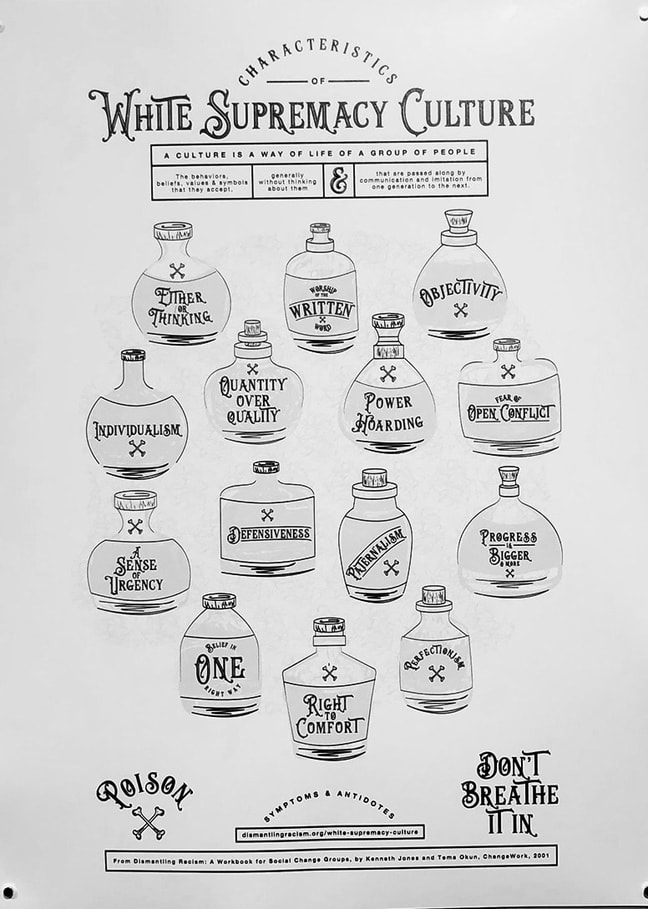
From the beginning, efforts to obstruct my work were framed in terms that might seem bizarre to those outside certain academic spaces. For instance, simply attempting to set an agenda for meetings caused my colleagues to  accuse me of “whitespeaking,” “whitesplaining,” and reinforcing “white supremacy”—accusations I had never faced before. I was initially baffled, but as I attended workshops led by my officemates and promoted by my supervising dean, I repeatedly encountered a presentation slide titled “Characteristics of White-Supremacy Culture” that denounced qualities like “sense of urgency” and “worship of the written word.” Written meeting agendas apparently checked both boxes.

Maybe she should move to Florida where DEI goes to die.

Berkeley’s Unperceived Table

Ed writes,

A question: if Berkeley is out of his study, and says ‘My table is in my study’, is he speaking truly or falsely? If truly, then ‘my table’ and ‘my study’ must have referents, and the referents must stand in the relation ‘in’. But neither referent is perceived, so neither exists, according to B’s first definition of ‘exist’, and so ‘My table is in my study’ is false. According to B’s second (counterfactual) definition of ‘exist’, the statement can be true, but then we have to drop the first definition. Then what else do we lose of B’s philosophical system?

For example, is the statement ‘the table in my study is brown’ true or false, given that if B were seeing the table, he would perceive it to have the sensible quality of brown, and given that B is now outside his study? If true, then he must concede that the referent of ‘the table in my study’ is bearing the visible quality signified by ‘brown’, and so concede that everything he says about the impossibility of material substance is wrong, e.g. in §9 of the Treatise.

Indeed the whole project of Idealism collapses once we allow the possibility of language, and thence the possibility of successfully referring to objects and states of affairs that are not perceived.

My valued interlocutor is being a bit quick here. Let's sift through this carefully starting with definitions of 'exist(s)' either found in or suggested by a charitable reading of Berkeley's writings.

D1. X exists =df x is being perceived. (Esse est percipi.)

D2. X exists =df x is such that, were a perceiver P on the scene, P would perceive x.

D3. X exists =df either x is being perceived or x is such that, were a perceiver P on the scene, P would perceive x.

(D3) is the disjunction of (D1) and (D2). It is suggested by this passage:

The table I write on, I say, exists, that is, I see and feel it; and if I were out of my study I should say it existed, meaning thereby that if I was in my study I might perceive it, or that some other spirit actually does perceive it. (PHK 3, quoted here) 

God would be the best candidate for 'some other spirit.'  The author of the SEP entry, Lisa Downing, writes,

If the other spirit in question is God, an omnipresent being, then perhaps his perception can be used to guarantee a completely continuous existence to every physical object. In the Three Dialogues, Berkeley very clearly invokes God in this context. Interestingly, whereas in the Principles, as we have seen above, he argued that God must exist in order to cause our ideas of sense, in the Dialogues (212, 214–5) he argues that our ideas must exist in God when not perceived by us.[20] If our ideas exist in God, then they presumably exist continuously. Indeed, they must exist continuously, since standard Christian doctrine dictates that God is unchanging.

There is much more to it than this, of course, but what I have said suffices to neutralize Ed's objection.  He thinks he has refuted Berkeleyan idealism. He has done no such thing. He ignores (D3).

I must also object to Ed's apparent identification of idealism with Berkeleyan idealism. Ed is being unduly insular. A little to the East of where he lives there is this land mass called The Continent where other forms of idealism have been known to thrive.

I am also puzzled by Ed's talk of phrases like 'my table' needing referents when he himself denies (in his book) that there is extra-linguistic reference and affirms that all reference is intra-linguistic.  As I read him, Ed is a linguistic idealist. Linguistic idealism, however, is by my lights much less credible than Berkeleyan idealism.

The Double Denial by the ‘Woke’

It is not unreasonable to maintain that there is no God and that nature alone exists. But suppose you take it a step further and deny nature as well. Then you are in the precincts of 'woke' lunacy.  Call it the Double Denial.

One way to deny nature is by denying that the biotic underpins the social and that as a consequence the difference between men and women is a matter of social construction and not a matter of biology.  But any sane person will grasp instantly that one cannot change one's sex by merely thinking of oneself as belonging to the opposite sex. It is also obvious that sartorial and cosmetic modifications will not turn the trick.

Less obvious, but equally true, is that chemical and surgical alteration of one's body cannot change one's sex even if the surgical alteration is of a deeply structural sort:  reduction of muscle mass, heart and lung volume,  bone density, size of hands, and length of limbs even unto the removal of portions of bones to make the altered person shorter.

Procrustes' BedBut of course the 'transgendered' biological men who compete in, and win, women's sporting events do not and would not submit to the modern-day equivalent of the Bed of Procrustes: they are not about to be modified in the drastic ways just mentioned.  And yet such men are allowed to pass themselves off as women.  To add insult to injury, some of these impostors are then awarded 'woman of the year' titles.

What is going on here? It is one thing to condemn the injustice to women and overall idiocy of this, quite another to understand how it could arise and be taken seriously by otherwise sane people.

One thing that needs explaining is how leftists, who are supposedly for women and against their oppression by men and 'the patriarchy,' could embrace something so antifeminist as the allowance of male interference with women's sports. I suggest that what we are witnessing here is a collision of motifs on the Left. One such is the oppressor-oppressed motif. Another is the hyper-constructivist denial-of-reality motif. These motifs are in tension with each other. If men oppress women, then women need their 'safe spaces' where they can feel secure against real or merely perceived micro- and macro-aggression. Accordingly, there is obvious need for  sexual segregation in certain areas such as sports competitions, locker rooms, restrooms, prisons, etc.  But if everything is a matter of social construction, as per the second motif, then so are sexual differences in which case they are not innate and immutable, but malleable. A man can 're-identify' as a woman with or without chemical and surgical alteration. Add in a third motif that of expressive individualism and for good measure throw in the 'my truth' meme.  If 'my truth' is that I am a woman, then I am a woman and can compete against women. (There is little or no chance that any woman will 're-identify' as a man so as to compete against them.)

The conflict of leftist motifs explains the utter absurdity of wokesters who tolerate the grotesquely unjust penetration of biological males into female spaces.

Can one see that one is not a brain-in-a-vat?

This is a repost from 21 December 2009, slightly emended. I've added a clarifying addendum.

…………………………..

John Greco, How to Reid Moore:

So how does one know that one is not a brain in a vat, or that one is not deceived by an evil demon? Moore and Reid are for the most part silent on this issue. But a natural extension of their view is that one knows it by perceiving it. In other words, I know that I am not a brain in a vat because I can see that I am not. [. . .] Just as I can perceive that some animal is not a dog, one might think, I can perceive that I am not a brain in a vat. (21)

Really?

A bobcat just walked past my study window. I see that the critter is a bobcat, and seeing that it is a bobcat, I see  that it is not a dog, or a deer or a javelina.  So far, so good. But then John Greco comes along and tells me that in the same sense of 'see' — the ordinary visual-perceptual sense — I can see that I am not a brain-in-a-vat, a BIV. But 'surely' one cannot see or otherwise perceive such a fact. Or so I will argue.

Argumentum ad Lapidem?

No way, I say.  Over at Substack.

Ed comments:

"He did not maintain that rocks and trees do not exist; he did not deny or even question whether they are; he offered an unusual ontological account of what they are, namely, ideas in minds, including the divine mind." (BV)

True, but careful examination of Berkeley’s argument shows that he provides no clear definition or explanation of what “ideas” are.

He opens the Treatise as follows:

It is evident to any one who takes a survey of the objects of human knowledge, that they are either ideas actually imprinted on the senses; or else such as are perceived by attending to the passions and operations of the mind; or lastly, ideas formed by help of memory and imagination — either compounding, dividing, or barely representing those originally perceived in the aforesaid ways.

But is it “evident”? I look at the brown and black colours of the surface of my desk. These appear to be qualities of the desk surface itself, and not “imprinted on the senses” at all. Is Berkeley saying that the desk surface itself is imprinted on my senses? But that strange claim has to be clarified. Later on he offers a critique of the idea of substance, arguing that ideas are mental items, therefore cannot be supported by an immaterial item, substance. But that begs the question. If ideas are sensible qualities like colours, what evidence is there for their being mental items?

As for Johnson’s argument, what is the quale corresponding to resistance? Resistance, i.e. Newtonian force, is the most material of qualities. How can there be a quale of resistance without resistance itself?

BV: Newton's First Law of Motion implies that a stone, say, will remain at rest unless acted upon by an external force such as Johnson's kick.  An object at rest thus resists being moved.  This resistance is a (dispositional) property of physical things.  The quale corresponding to this resistance could be called felt resistance.  It is a mental in nature and cannot exist without a perceiver who, for example, tries to move a rock with his foot.

"How can there be a quale of resistance without resistance itself?"  An idealist of the Berkeleyan sort could say that there can't be a quale of resistance without resistance itself but then go on to say that (i) physical things are nothing more than objects of the divine mind, and (ii) resistance qualia exist only in finite (creaturely) minds. In this way the distinction between resistance qualia and resistance itself could be upheld.

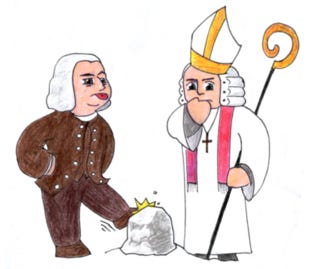
The point I was making in my Substack article was that the good bishop cannot be refuted by kicking a stone. This is because Berkeley is not denying that there are stones; he is making a claim about the mode of being of stones, namely that their being/existence is ideal: they are accusatives of divine awareness and nothing more.  As I read him, Berkeley is not an eliminativist about stones and trees in quads, etc.  You could call him an ontological reductionist about such and sundry.

Daniel Dennett, by comparison is an eliminativist about qualia.  He I can refute by kicking 'stones,' namely his cojones. If I kick him in the groin, he will be brought to understand that felt pain, phenomenal pain, lived pain, is the most real thing in the world, and cannot be denied. I am assuming, of course, that he is not a zombie (as philosophers use this term). But that leads us in a different direction.

Climate ‘Theology’

Tucker Carlson has a bad habit of referring to climate alarmism as climate 'theology.'  I know what he is trying to say, but it is unseemly for a conservative to misuse a perfectly good word and denigrate that to which it refers. Natural theology, which is a branch of philosophy, is a legitimate inquiry, as is theology proper, which is not a branch of philosophy. A second example:

In the left-wing rag of record, the NYT, we find:

“When you buy gold you’re saying nothing is going to work and everything is going to stay ridiculous,” said Mackin Pulsifer, vice chairman and chief investment officer of Fiduciary Trust International in New York. “There is a fair cohort who believes this in a theological sense, but I believe it’s unreasonable given the history of the United States.”

So to believe something 'in a theological sense' is to believe it unreasonably.  It follows that liberals have plenty of 'theological' beliefs.  In the 'theology' of a liberal, theology can be dismissed unread as irrational.

And then there is the misuse of 'metaphysics.' I'll save that rant for later.

The wider pattern is the secularization of religious language.

Take ‘retreat.’ Time was, when one went on a retreat to get away from the world to re-collect oneself, to meditate on the state of one's soul and on first and last things. But now one retreats from the world to become even more worldly, to gear up for greater exertions in the realms of business or academe. One retreats from ordinary busy-ness to prepare for even greater busy- ness. 

Another perfectly good word has been destroyed. 

As I have said more than once, if you are a conservative, don't talk like a damned 'liberal.' Why the sneer quotes? Because there is nothing classically liberal about contemporary liberals who are ever on the slouch toward leftism, and its most noxious variant, 'wokery.' 

Realize that we are in a war, and in a war one does not give ammo to the enemy. Do not validate, by employing, the Left's obfuscatory terminology. Never use 'woke' without sneer quotes. Never use words like 'homophobic' or 'transphobic.' Never use 'Islamophobia' as I once caught the great Victor Davis Hanson doing. A phobia is an irrational fear, and there is nothing irrational about fear of radical Islam. 

Language matters. Some battles are won and lost on linguistic ground. Leftists understand this. They understand that he who controls the language controls the debate. This explains the Left's unremitting  Orwellian abuse of language and their asinine question-begging and question-burying neologisms.

Are There Any Decent Democrats?

There is at least one. His name is Robert F. Kennedy, Jr. I recommend his A Letter to Liberals: Censorship and COVID: An Attack on Science and American Ideals (Skyhorse Publishing, 2022). It is mercifully short,  x + 110 pages long, and well worth your time. It is extremely well-documented. The text itself runs to x + 87 pp. with 239 endnotes, most of them with hyperlink info.  Here is something I didn't know:

At the outset of the pandemic, most of the world's leading news organizations — BBC, Reuters, AP, AFD, CBC, CNN, CBS, ABC, Washington Post, Financial Times, Facebook, Google/YouTube, Microsoft, Twitter, and others — organized themselves into a collusive antidemocratic and anticompetitive cartel known as the Trusted News Initiative (TNI) — pledged to squelch and censor all reports about government COVID countermeasures that challenged official proclamations. (p. 52 f; endnote 153 points us to the BBC, December 10, 2020.)

I don't believe that there is any chance that  RFK Jr. will 'pull a Tulsi' and quit the Democrat Party, although he should. He won't because he's  a Kennedy, and I am guessing that he  already has enough trouble with his extended family.  (See here.) Like many old-time Dems, he fancies he will wrest the leadership of his party away from the 'woke'-left totalitarians who now control it. If that's what he thinks, he's fooling himself.  

The irony is that RFK fils, despite his speech impediment and lack of charisma, has a better chance of beating either Trump or DeSantis in 2024 than any other Dem I can think of.